
The complete guide
A Practical Guide to Choosing a Biometric Safe Box
Small valuables can end up scattered across drawers, shelves and bags. A dedicated safe gives selected items a consistent place to go. The useful question is not just whether a safe locks, but whether its size, access methods and stated protection match what you need.
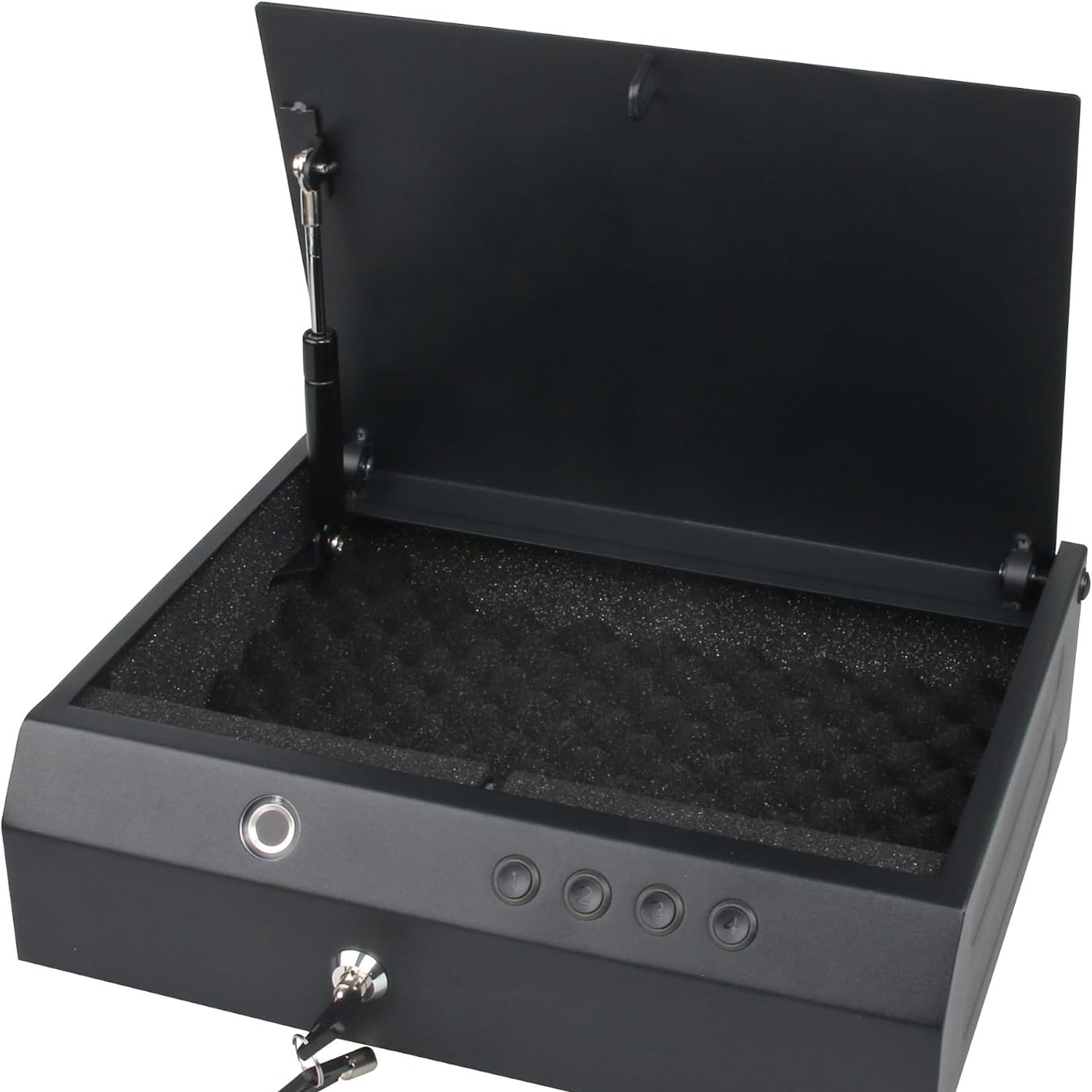
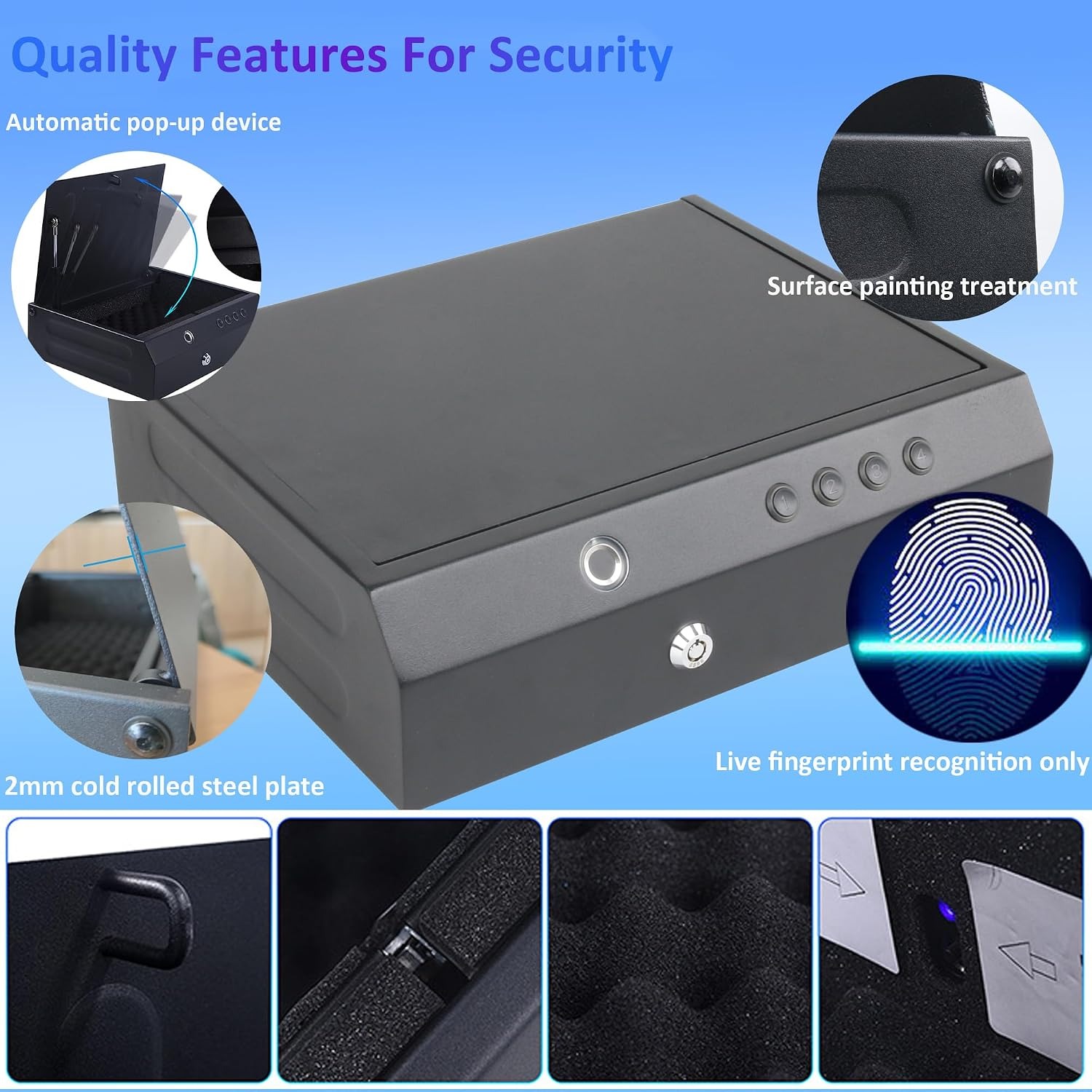
This Biometric Safe Box combines fingerprint, digital and key access in a low rectangular body. It is listed for home and office use, with a pop-up lid and sponge interior. Before choosing it, take a few minutes to check the fit, think about who needs access and separate the listed features from protection claims that are not provided.
Start with what you need to store
Make a short inventory before comparing safes. You might be looking for somewhere to keep small personal belongings or items that otherwise move between several drawers. Lay those items out and measure the space they take up, including any cases or protective packaging.
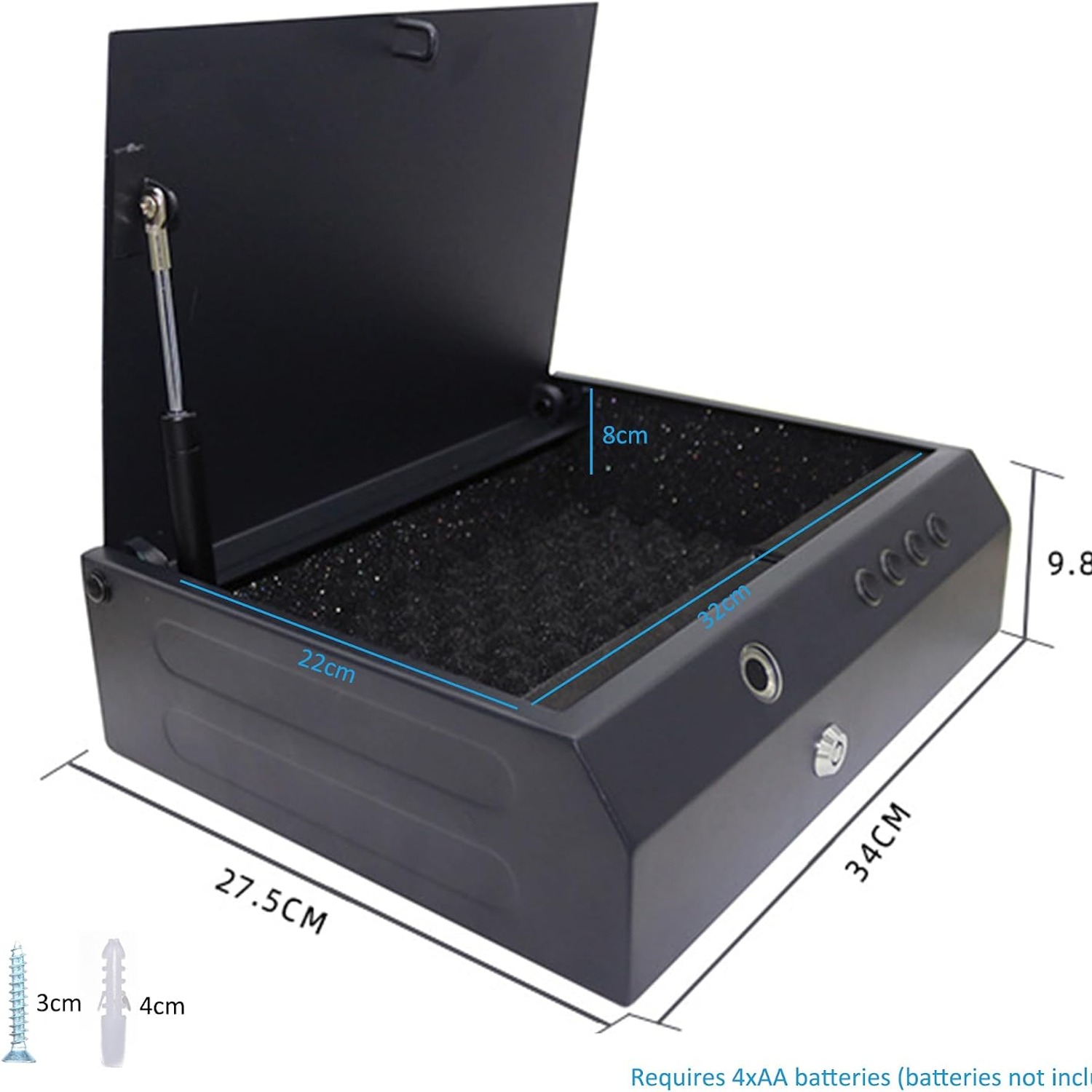
This small valuables safe measures 27.5 × 34 × 9.8 cm. Those figures describe the listed product size, not confirmed internal storage space. The walls, padding and lock parts occupy some of the available room, so do not assume an item will fit simply because it is smaller than the outside measurements.
Internal dimensions and storage volume are not given by the maker. If one particular item is the reason for your purchase, ask for those measurements first. This is especially important for rigid cases or documents you do not want to fold.
Understand the three access options
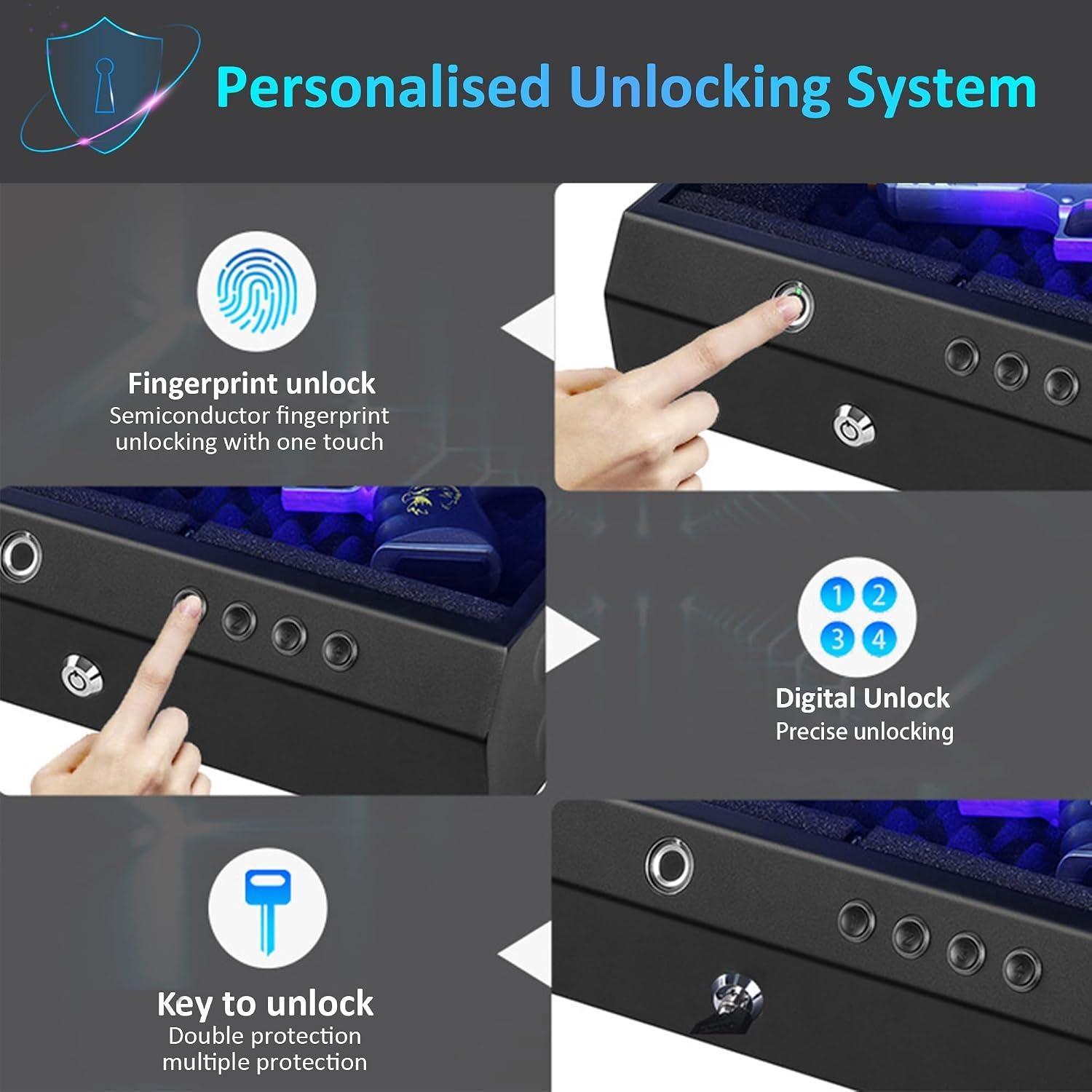
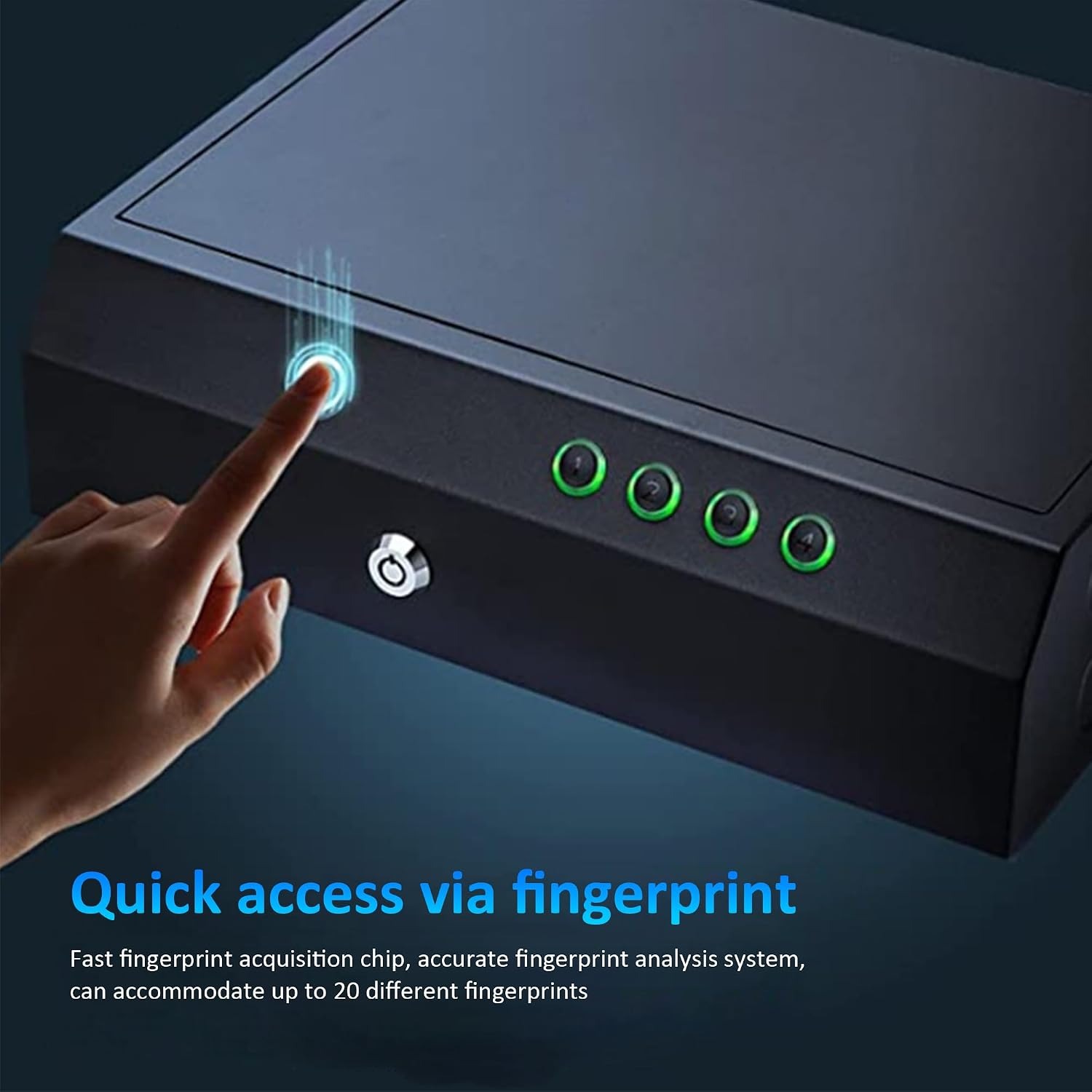
A fingerprint access safe lets you use a registered fingerprint to unlock it. This model supports up to 20 stored fingerprints. That is its stated fingerprint capacity, not a promise of 20 separate user accounts or different permission levels.
Digital access and key access are also listed. These provide alternatives to the scanner, although the maker does not explain the digital setup process or code options. Read the instructions that arrive with the safe rather than guessing how to register or change access details.
Two keys are included. Decide where they will live before putting belongings inside. Keeping the keys in the safe would make them unavailable when you need another way to open it. A separate location with controlled access is a more useful plan.
Treat speed claims with care
The maker advertises a 0.1-second fingerprint scan time. That figure is not supported here by test conditions, so it should not be treated as a guaranteed total opening time.
For everyday use, the wider process matters too. You need to reach the safe, use the chosen access method and allow the lid to open. A well-chosen location can make that routine more practical than focusing only on a scan-time claim.
When setting up a fingerprint security box, follow the supplied enrolment steps carefully. Test your chosen access methods while the safe is empty. This gives you a chance to understand the controls before you depend on them for stored belongings.
Measure the location, not just the box
The low shape may make this compact biometric safe worth considering for a cabinet, closet or drawer. All of those placement options appear in the maker information. None removes the need to measure your own furniture.
Check the opening through which the safe must pass, as well as the space where it will sit. A drawer can have enough room inside but a narrower opening or fittings that get in the way. Cabinet hinges and shelf supports can also reduce usable space.
The lid pops up after unlocking, so height clearance matters. A drawer safe box must be accessible in its chosen position, not simply fit when closed. Think about where your hand will go and whether the open drawer or cabinet door leaves enough room to use it.
Check support and mounting before installation
The product details list a weight of 5.56 kg. Your shelf or drawer must support that weight plus whatever you place inside. Check the furniture's guidance rather than assuming that a shallow safe is also lightweight.
Wall mounting is described as an option, but the maker does not give fixing positions, required hardware or installation steps. The package contents list one safe and two keys. There is no confirmed mounting kit.
If wall installation is central to your plan, get those details before ordering. Fixings must suit both the safe and the wall. Do not drill into the body or improvise an installation based only on a general placement claim. Follow the actual product instructions.
Know what the construction does and does not tell you
The maker describes a black body made from 2 mm cold-rolled steel. That is useful construction information when comparing a cold rolled steel safe with other storage boxes. It does not, by itself, establish a tested level of protection.
No burglary rating, fire rating or water resistance rating is stated. Insurance approval is also not provided. Fingerprint access describes how the lock is operated, not how the whole safe performs under a particular threat.
If you are buying to meet an insurer's conditions, ask the insurer what certification and installation it requires. If your main concern is fire or flood damage, look for explicit test ratings for that purpose. Do not fill a missing specification with an assumption based on the word “safe.”
Consider the lid and interior
The automatic pop-up lid gives access from above once the safe is unlocked. This makes the layout of the surrounding space important. Objects placed on top could obstruct opening, so plan to keep that area clear.
Inside, the maker lists sponge padding. A padded interior safe offers a cushioned resting surface for belongings, but the maker does not describe separate compartments, adjustable dividers or a removable tray.
Think about how your items will sit together. Avoid crowding the interior or placing hard edges against delicate belongings. If you need fitted compartments or a specific lining for a particular item, ask for more detail rather than assuming those features are included.
Plan for batteries from the start
Electronic operation requires four AA 1.5 V batteries, and they are not included. Have the correct batteries ready when the safe arrives so you can follow the setup instructions without interruption.
Battery life is not specified. The maker's description also does not explain whether there is a low-battery warning or an external power option. Those are useful questions if the safe will be used often or placed somewhere less convenient to reach.
Keep the instructions where you can find them. Follow their battery replacement guidance, and keep the supplied keys accessible outside the safe. A battery powered safe still needs a simple maintenance routine, even when fingerprint entry becomes familiar.
Decide whether it suits your household or office
This home office safe is listed for both settings. Its three access methods may appeal if you want a choice between fingerprint, digital and key entry. The right choice still depends on your storage habits and any rules that apply to the contents.
At home, consider who should have access and where the keys will be kept. In an office, check whether workplace policy calls for a certified safe, an access log or other features not stated by the maker.
As a gift, it is worth checking the recipient's space and intended use first. A cabinet safe box is a practical purchase only when it fits the cabinet and the items. Include the need for batteries in that conversation, too.
Keep care simple and check the purchase terms
Use a soft, dry cloth for routine exterior cleaning. Keep the scanner clean and avoid spraying cleaner into the lock or electronic controls. No water resistance rating is stated, so choose a dry location away from likely spills.
Before ordering, check delivery information for your address. Check our delivery and returns pages' current return conditions as well, including the steps to follow if the item arrives damaged, incomplete or incorrect.
The maker lists full refunds across several return reasons, but the applicable our process still needs checking. Keep the packaging and purchase details until you have inspected the safe, confirmed its fit and tested its operation.
The short version
Choose this fingerprint lock safe for its stated features: three access methods, capacity for up to 20 fingerprints, a pop-up lid and a sponge interior. Measure the available space carefully and confirm internal dimensions if a specific item must fit.
It is a storage option with biometric access, not a substitute for an unstated certification. If the dimensions and access choices suit your routine, it is worth considering. If you need rated protection, confirmed mounting details or an exact capacity, resolve those questions before buying.