
The complete guide
Choosing a Wall Mounted Key Safe for Shared Access
A spare key is only useful if the right person can reach it
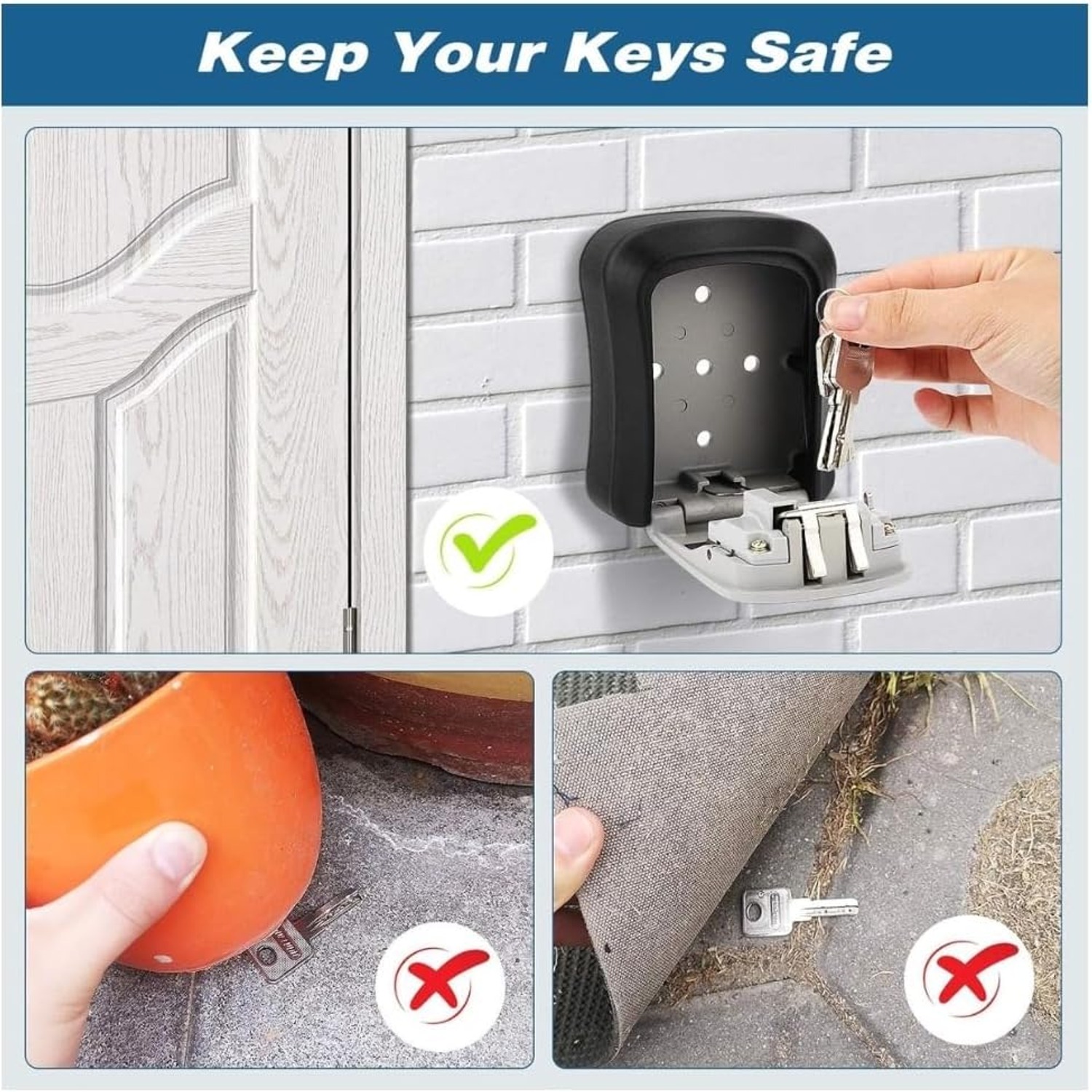
A spare key can save a wasted trip or a long wait outside. The awkward part is deciding where to keep it. A loose hiding place can be hard to explain, while handing over a key in person is not always practical.
A wall mounted key safe gives that spare key a fixed home. You share the combination with the people who need access, rather than arranging every handover around your schedule.
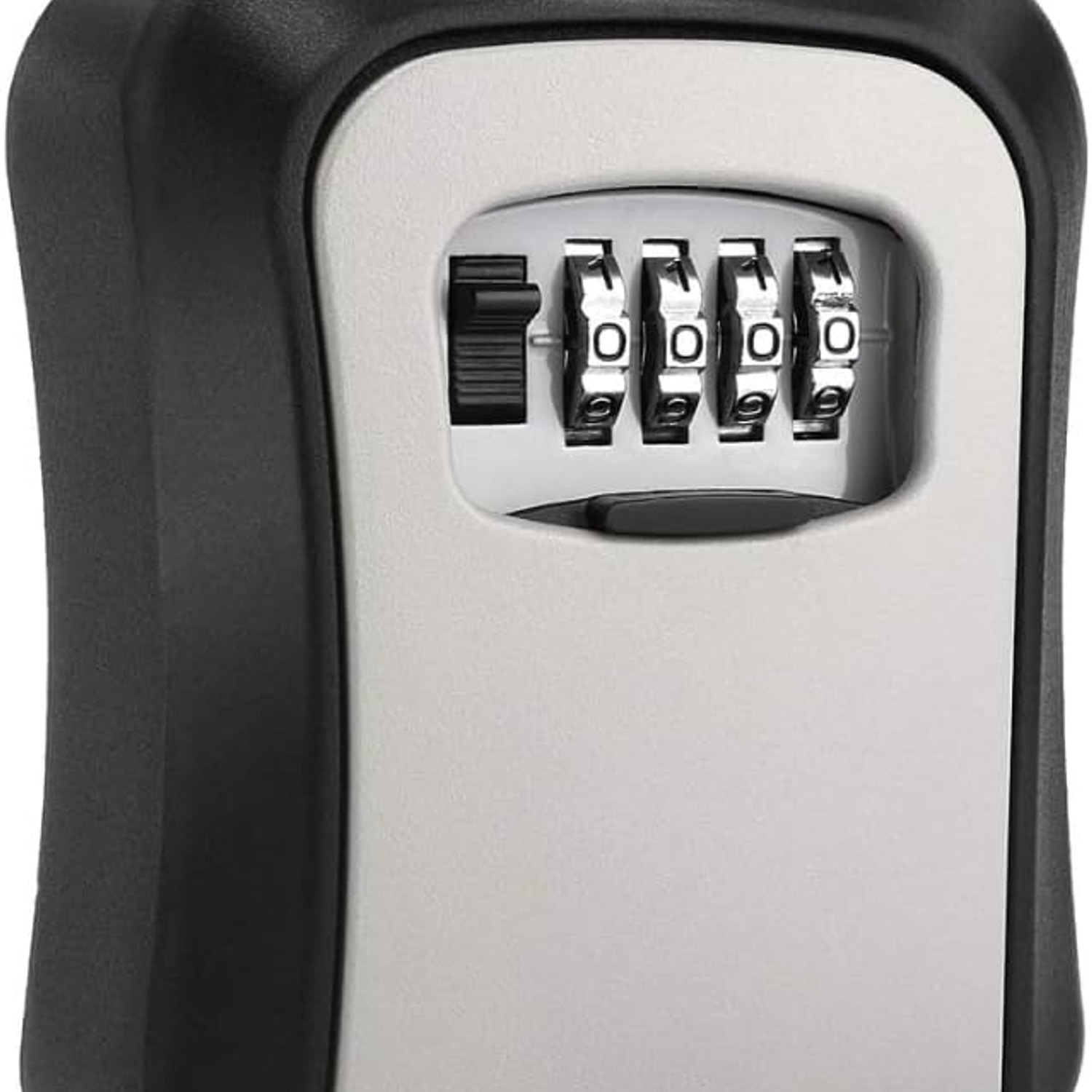
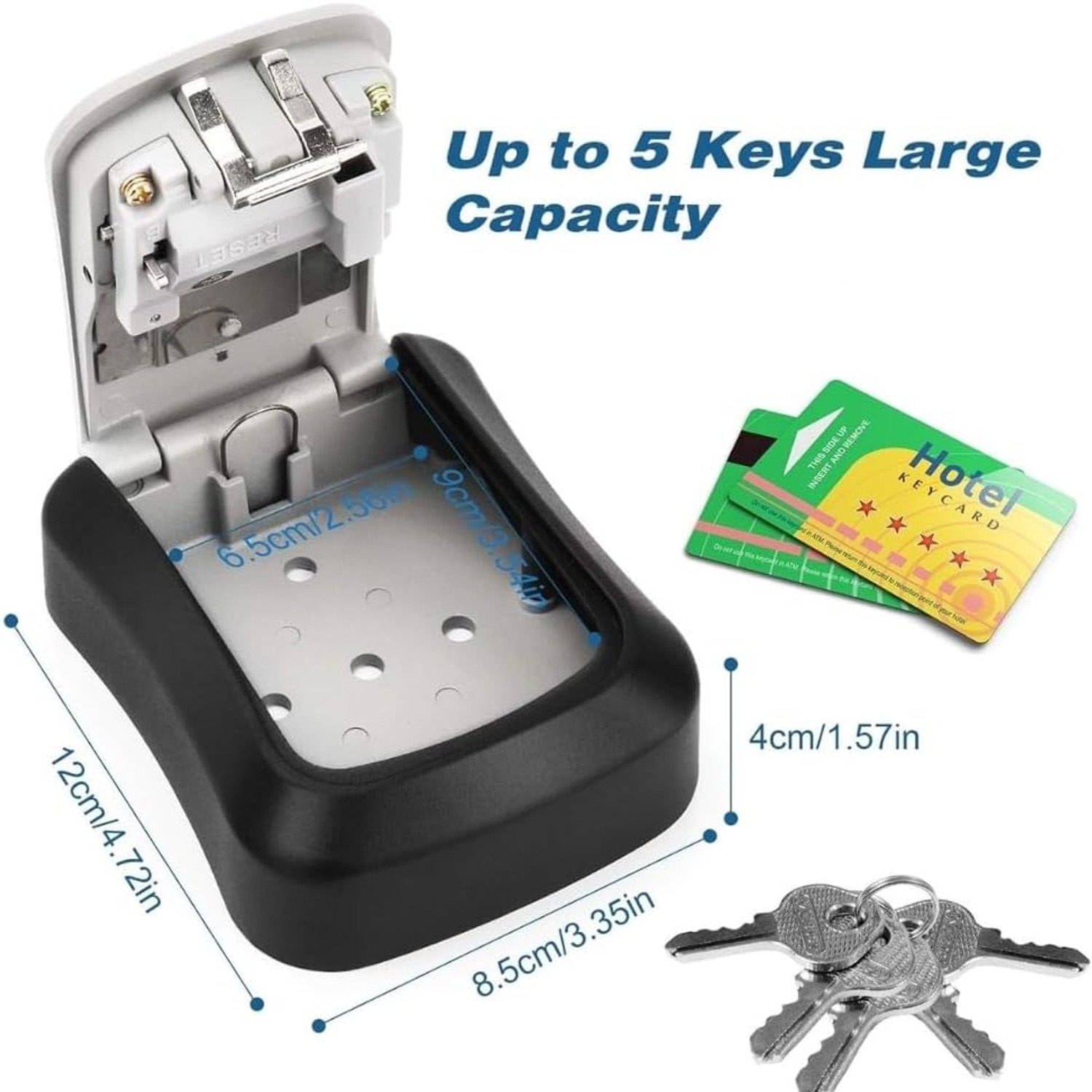
This model uses a resettable four-digit mechanical lock. It has a zinc alloy housing, a sliding weather cover and an exterior measuring 4 cm deep, 9 cm wide and 12 cm high. Those details make it worth considering for everyday shared access, but fit and placement still matter.
How the combination system works
The box opens using a four-digit code set on mechanical dials. There is no app to manage, and the mechanical lock does not need batteries for code operation. That keeps the access method straightforward for people who prefer a physical lock.
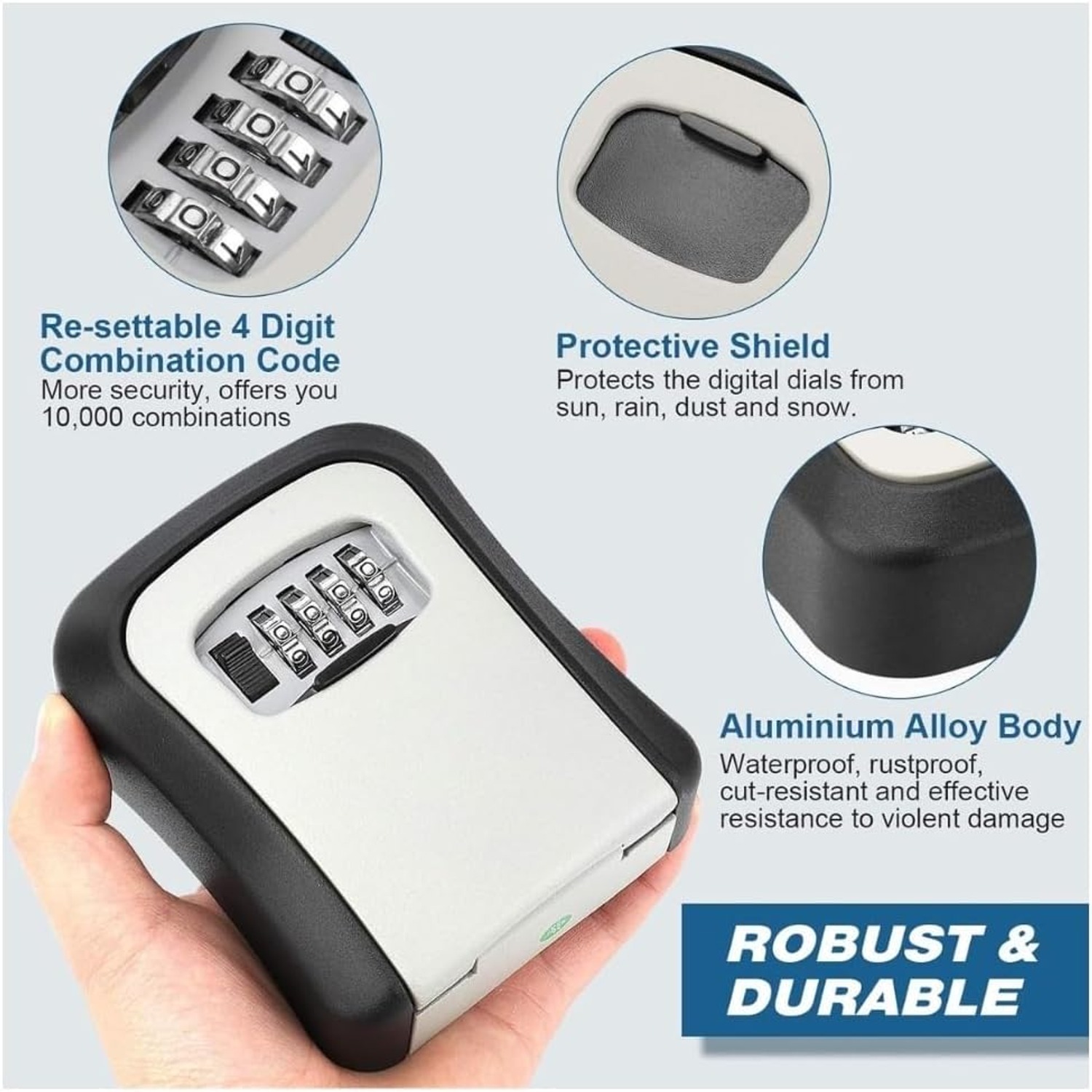
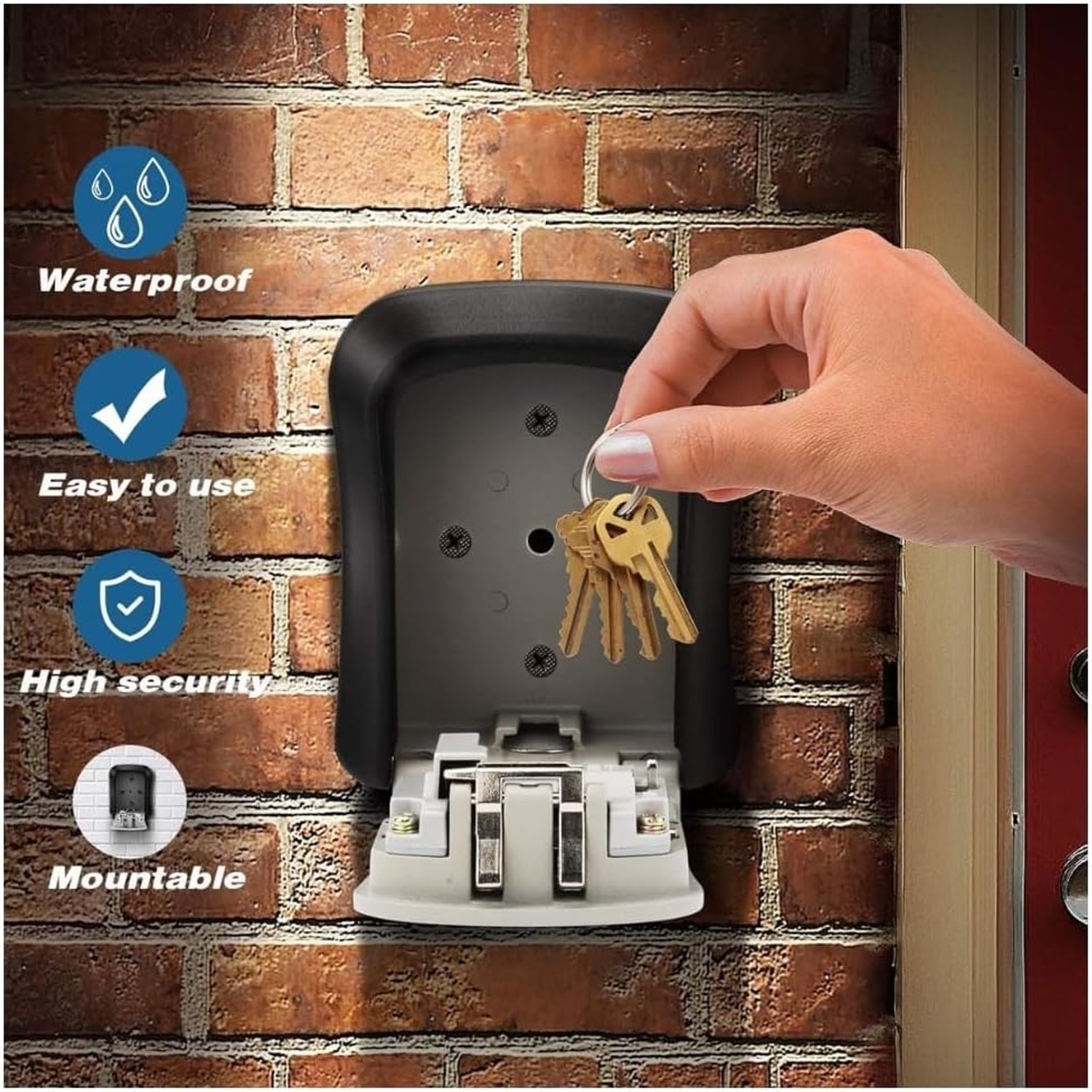
The maker states 10,000 possible combinations. You can reset the code using an interior selector lever, following the instructions supplied with the product.
Before putting a key inside, learn the opening and reset process. Test your chosen code with the box open so a setting error does not leave the key out of reach. Avoid guessing how the selector works or forcing a dial that does not move freely.
A resettable key safe is useful when access changes over time. The important part is remembering to change the code, not just choosing one at the start.
Decide who needs access
Think about the people who will use the box before you choose where to fit it. A household spare key may only need to serve family members. A rental property key safe may be used by different guests or service providers over time.
Those situations call for different routines. A family may keep the same code for a while, while a property manager may need to change it after each agreed access period.
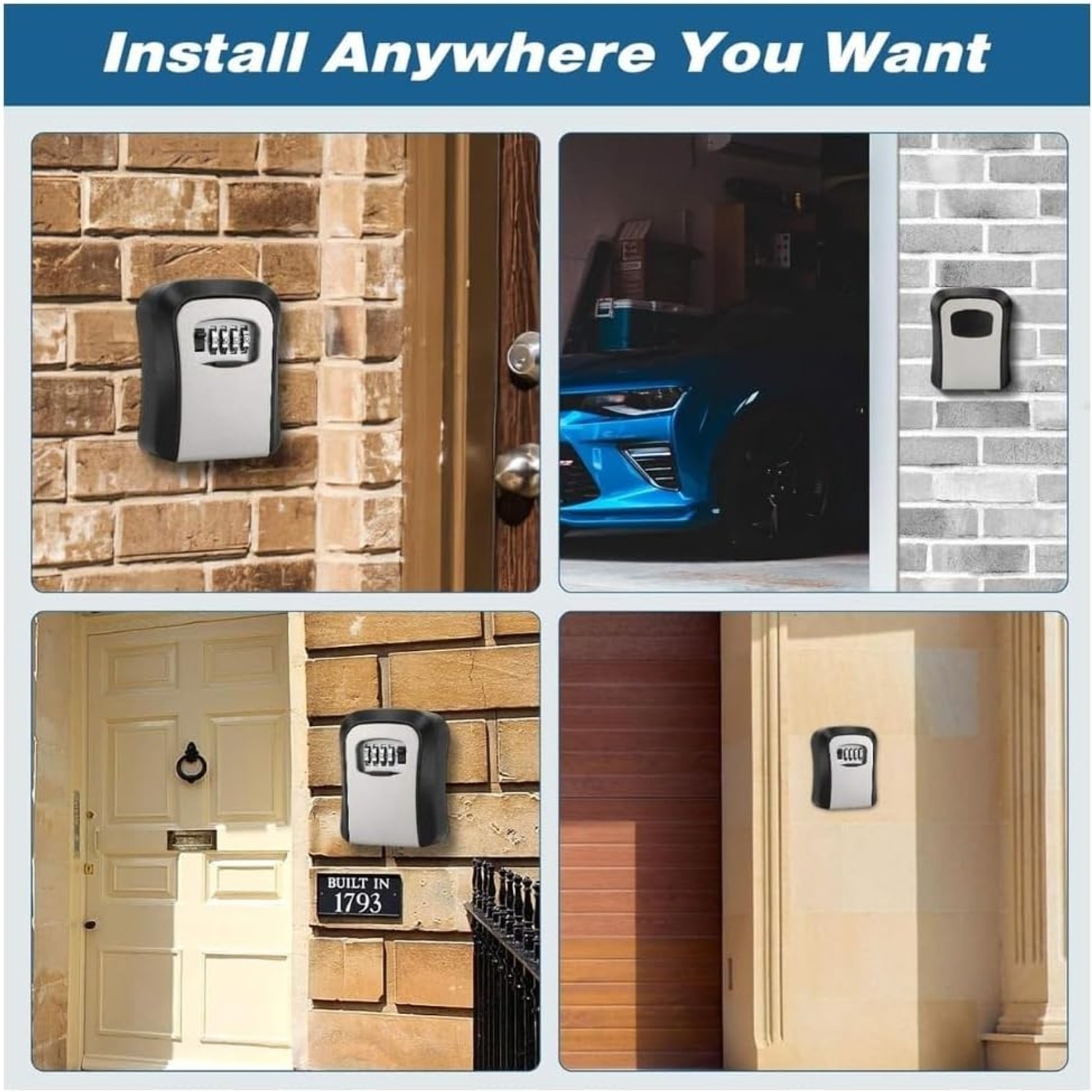
The product is also described for garages and offices. In either setting, give one person responsibility for the code and key checks. A shared access key safe works better when everyone knows who manages it.
Remember that a mechanical code does not tell you who opened the box. No access log or user-specific code system is described here. If you need those features, compare other types of access control.
Check the key, not just the box size
The external dimensions are compact, but they do not tell you how much room is inside. This box measures 4 cm from front to back, 9 cm across and 12 cm high.
The maker says it can hold multiple keys or access cards. It does not give internal dimensions, a fixed key count or a maximum card size. That leaves an important check for anyone with an oversized key head, a remote fob or a thick key ring.
Look at what you actually plan to store. A single flat key has different space needs from a bunch of keys with tags attached. Do not assume that an item will fit because it is smaller than the outside of the box.
If fit is uncertain, ask for internal measurements before ordering. This matters especially when choosing garage key storage that must also hold a bulky remote.
Understand the weather protection
This outdoor key box is described as weather resistant. Its sliding cover shields the combination dials from dust, rain and snow. Close that cover after each use so it can do its job.
Weather resistance is not the same as a stated waterproof classification. The maker does not give an ingress protection rating, immersion limit or tested exposure period.
For that reason, a sheltered mounting point is a sensible choice. Think about where rain runs down the wall, where sprinklers reach and whether wind drives water into the area.
The zinc alloy housing is a stated material fact. It does not, by itself, establish how the box will perform in every climate. If your location has severe exposure or salt spray, seek more specific guidance rather than assuming the material name settles the question.
Choose a sensible mounting position
Wall mounting gives the key safe a fixed location. Mounting hardware is included, but the maker's description does not specify every wall type it suits.
Start with the surface. Sound masonry, timber and other wall constructions can need different fixings and fitting methods. Confirm that the supplied hardware is right for your chosen surface, and get help if you are unsure.
Next, think about daily use. The person collecting the key should be able to reach the box, read the dials and open it without strain. Leave enough room to move the weather cover and use the door.
Avoid choosing a spot based only on convenience. Consider visibility from public areas and whether someone could watch a user enter the code. A position that is easy to describe does not have to be obvious to every passer-by.
Set a clear key-return routine
A combination key box solves the handover problem only if the key comes back. Agree on what users should do after opening the property.
For some homes, the spare key may go straight back into the safe. In another setup, the user may keep it for an agreed visit and return it before leaving. Choose one routine and explain it clearly.
Ask users to check that the box is closed, move the dials away from the opening code and close the weather shield. They should follow the supplied locking instructions rather than assuming a closed door means a locked box.
For a rental or shared workplace, keep the access message brief. Give clear directions privately, explain the return step and say who to contact if anything does not work.
Treat the code as part of your access plan
A four-digit code is easy to share. That is convenient, but it also means an old message can remain useful until you change the combination.
Share the code only with people who need it. Avoid leaving it in public notes or posting it where it can be linked to the property.
When a visitor, contractor or guest no longer needs access, consider resetting the combination. Store the current code somewhere secure and separate from the box.
No recovery method is specified in the maker's description. Do not assume there is an override key or a reset that works from outside a locked box. Learning the instructions before use is much easier than dealing with a forgotten code later.
Keep security claims in perspective
This product offers a locked place for spare keys. It should not be treated as proof that every security requirement has been met.
The maker does not state a burglary rating, fire rating or independent certification. The number of possible codes describes the combination system, not the box's resistance to tools or forced entry.
If your insurer, landlord or workplace has rules for external key storage, check those rules before buying. Some situations require a named standard or approved installation method.
Also think about the value of the access being stored. A key may open far more than a garage or front door. The choice of box, placement and code handling should reflect that responsibility.
Care is simple, but checks still matter
Keep the outside clean with a soft cloth. Clear loose dirt from around the dials, and avoid harsh cleaners or direct high-pressure water.
Do not force the cover, lock or door. If operation changes, check the instructions and seek advice rather than applying more pressure. No particular lubricant or chemical treatment is given by the maker.
From time to time, check that the mounting remains firm and that the door closes as expected. Confirm that the weather cover moves properly and stays closed between uses.
It also helps to check the contents. Make sure the stored key still works for the intended lock, especially after a property lock has been replaced. A well-kept box cannot help if it contains an old key.
Check the order details before fitting
The maker includes one key safe and mounting hardware.
Check the current delivery estimate for your address when ordering. Read our delivery and returns pages return terms too, particularly before drilling holes or making permanent changes.
When the box arrives, inspect it and check its size and operation before fitting it. Keep the packaging while you confirm that your keys fit and that the location works.
If something is missing, damaged or different from the order, contact us through our stated process. Keep the order details handy so the issue can be explained clearly.
The short version
Choose this wall-fixed key storage box if you want a mechanical four-digit system, a resettable code and a weather-covered place for spare keys. Its stated uses include homes, garages, rentals and offices.
Before buying, confirm key fit, choose a suitable wall and decide who will manage the code. Those practical checks matter as much as the lock itself. With a clear return routine and sensible placement, shared key access becomes easier to organise.