
The complete guide
Choosing a Key-Locking Chest for Documents and Small Valuables
A dedicated place for the things you keep looking for
Passports in one drawer, spare cash in another, important papers somewhere else. Small belongings are easy to scatter around the home. A single storage chest gives them a regular place, so you know where to start looking when you need them.
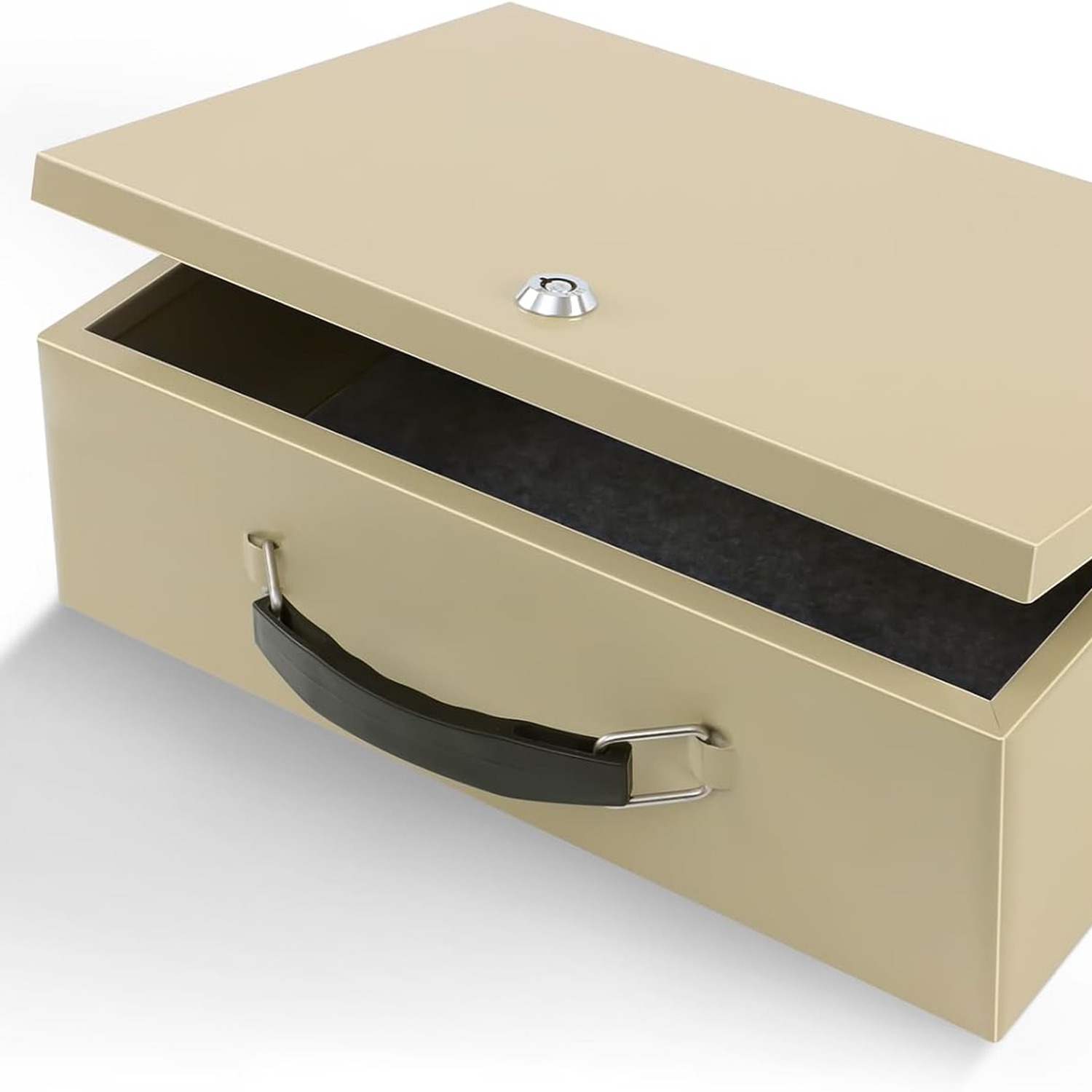
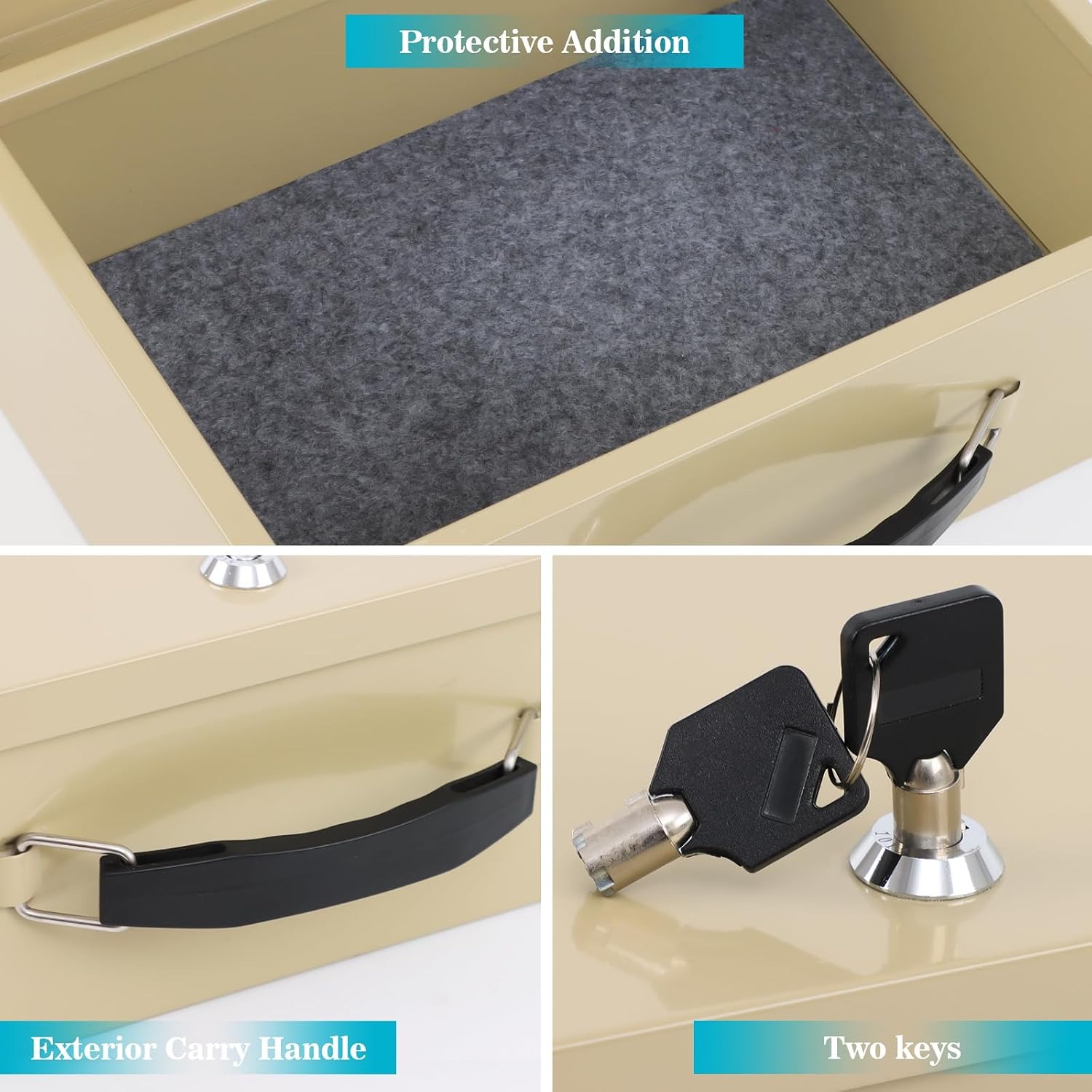
This Fire Resistant Chest combines a metal body, a key lock and an exterior carry handle. It is described for storing documents, cash, passports, jewellery and similar items. Its tabletop format suits someone who wants a separate container rather than loose storage in an open drawer.
The important part is choosing it for the features that are actually documented. The maker's description has no fire test rating, and its size figures conflict. Those limits matter more than the product name when deciding what to put inside.
What the key lock does
The chest uses physical key control. You close the chest and use the key to control access, following the supplied manual. There is no electronic code to remember or set up.
That makes a key lock document box a straightforward choice for someone who prefers a physical key. It also creates a practical responsibility. You need a sensible place for the key that is separate from the chest and available when you need access.
The number of supplied keys is not stated. If two people need access, or you want a spare, confirm the key quantity before ordering. Do not assume a replacement-key service is available.
A lock alone does not tell you how a chest performs against forced entry. The maker gives no burglary rating here. Think of the key as a means of controlling normal access, not evidence of a tested level of theft protection.
Read the fire-resistant description carefully
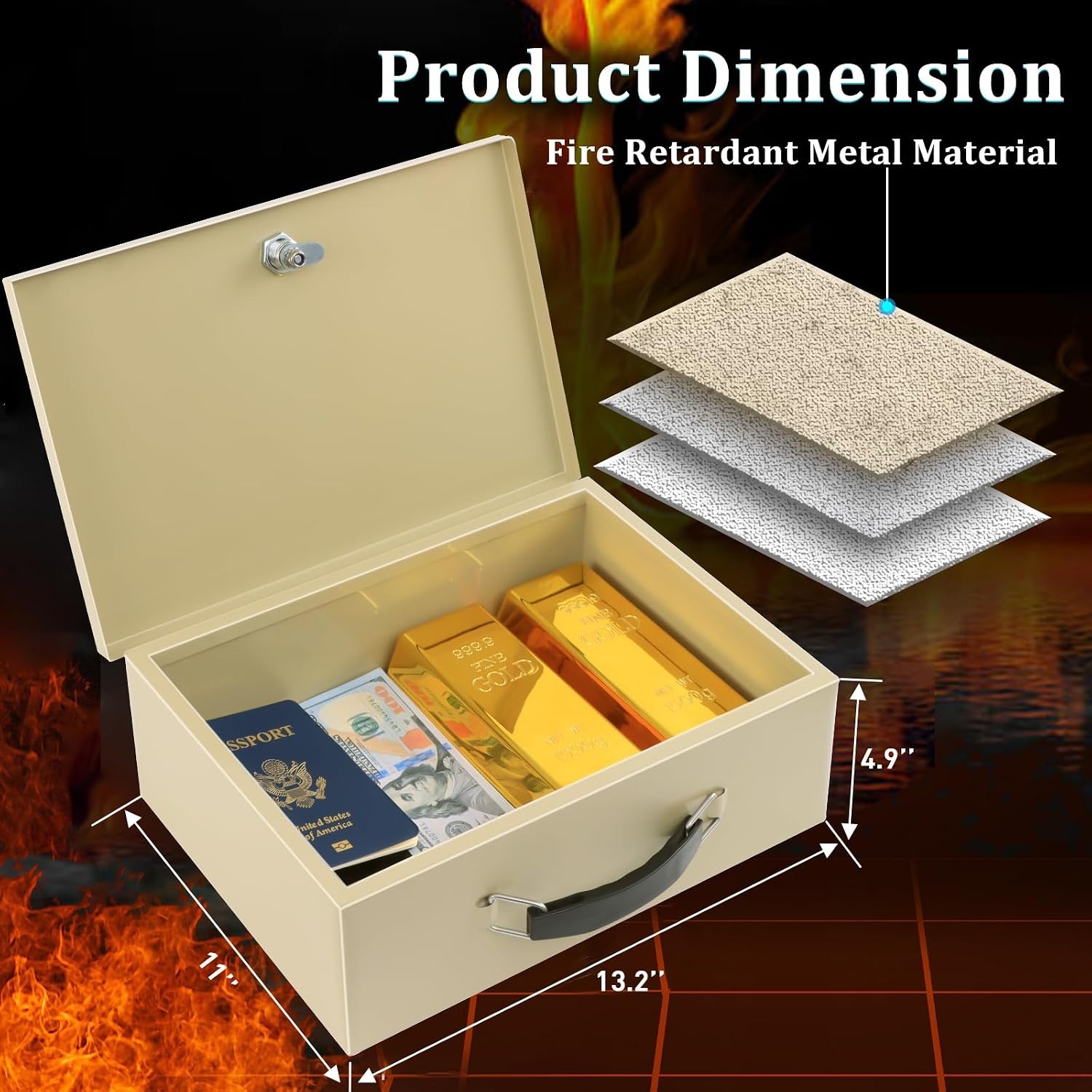
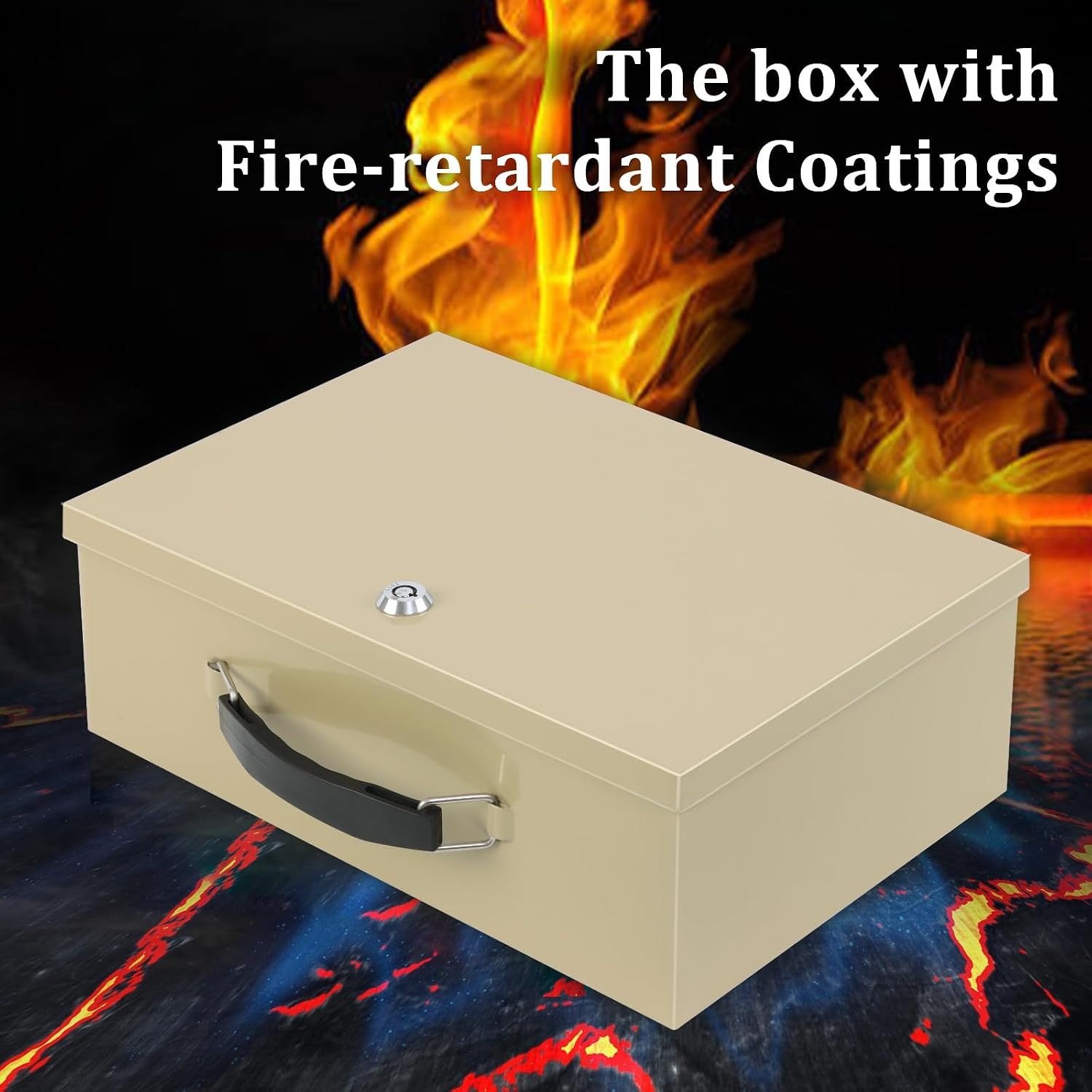
The maker describes this chest as fire resistant. It does not give a recognised test standard, a temperature limit or a protection duration.
Without those details, there is no sound basis for saying how long papers would remain protected in a fire. There is also no stated rating for electronic storage media. A hard drive fitting inside a box is a different question from whether its data would survive heat.
If your main reason for buying a portable fire safe box is documented fire protection, ask for the test information before purchase. Look for evidence that matches the contents you intend to store and any requirements set by your insurer.
The category name and product heading should not replace that check. This chest should not be treated as certified, insurance-approved or suitable for a particular fire exposure when the maker does not establish those claims.
Check document fit before choosing
Sizing is the main point to resolve for this model. The listed product dimensions are 11.5 x 27.9 x 13 cm. The maker's description also gives a capacity of 0.3 cubic feet and separate internal measurements that do not agree with the other figures.
Those numbers cannot all be relied on as a clear description of usable space. For example, the stated internal measurements in the maker text are larger than the listed exterior measurements in some directions. That makes a fit promise unsafe.
An A4 sheet measures 21 x 29.7 cm. The listed product dimensions do not confirm that it can lie flat inside. Although “A4 Document Chest” appears in the heading, do not order on the assumption that full-size papers will fit unfolded.
Ask for verified internal length, width and height. Measure any folder, sleeve or document wallet too. The container around your papers may need more room than the papers themselves.
Plan around the contents, not just capacity
A capacity figure can help compare storage boxes, but it does not describe the shape of the space. Two containers with similar volume may hold very different items.
Start by gathering what you want to store. A few passports and folded papers need a different layout from jewellery boxes or a stack of document wallets. Measure the largest item, then consider how much room you need to reach smaller pieces beneath it.
For household document storage, access can matter as much as total capacity. A box packed tightly to the lid may be awkward when you need one paper from the bottom. Leave enough room to take things out without bending or catching them.
If you need flat A4 storage, do not plan around folding documents as a workaround unless you are comfortable doing so. Some originals are better kept flat. Choose storage that matches how you need to preserve and handle them.
Who this chest may suit
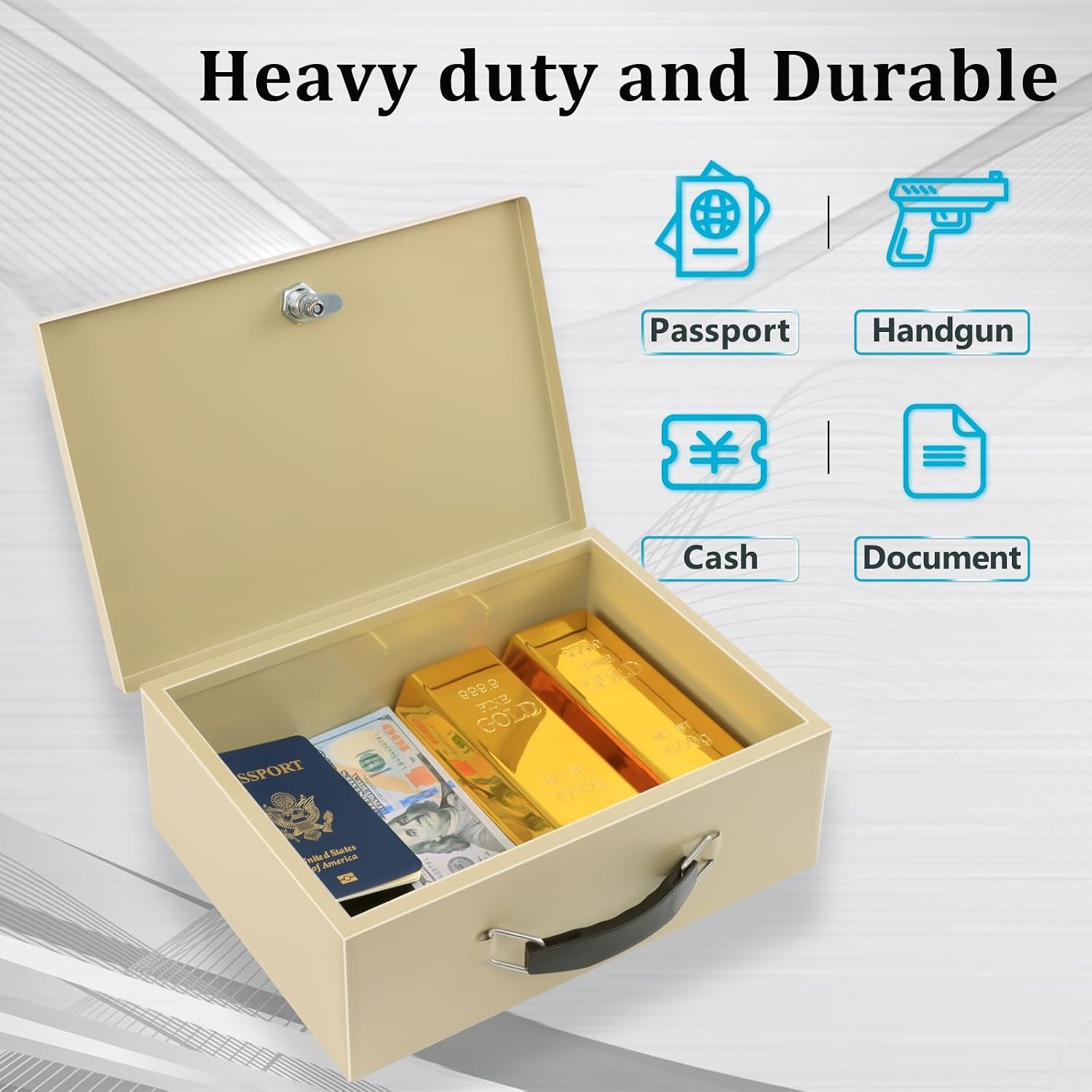
This compact metal chest may suit someone who wants a single place for a small group of valuables. The listed uses include cash, passports and jewellery, making it worth considering for everyday household organisation.
It may also appeal if you prefer key control to a keypad. There is less setup to think about, though keeping track of the key remains part of using it.
It is a less clear match for someone who needs a documented fire rating, flood protection or an anchored security safe. None of those features is established in the maker's description. Choosing a more clearly specified product is sensible when one of those needs is essential.
For a home valuables box, begin with the job you need it to do. Keeping belongings together is a different goal from meeting an insurer's storage rules. Be clear about which problem you are trying to solve.
Portability and placement
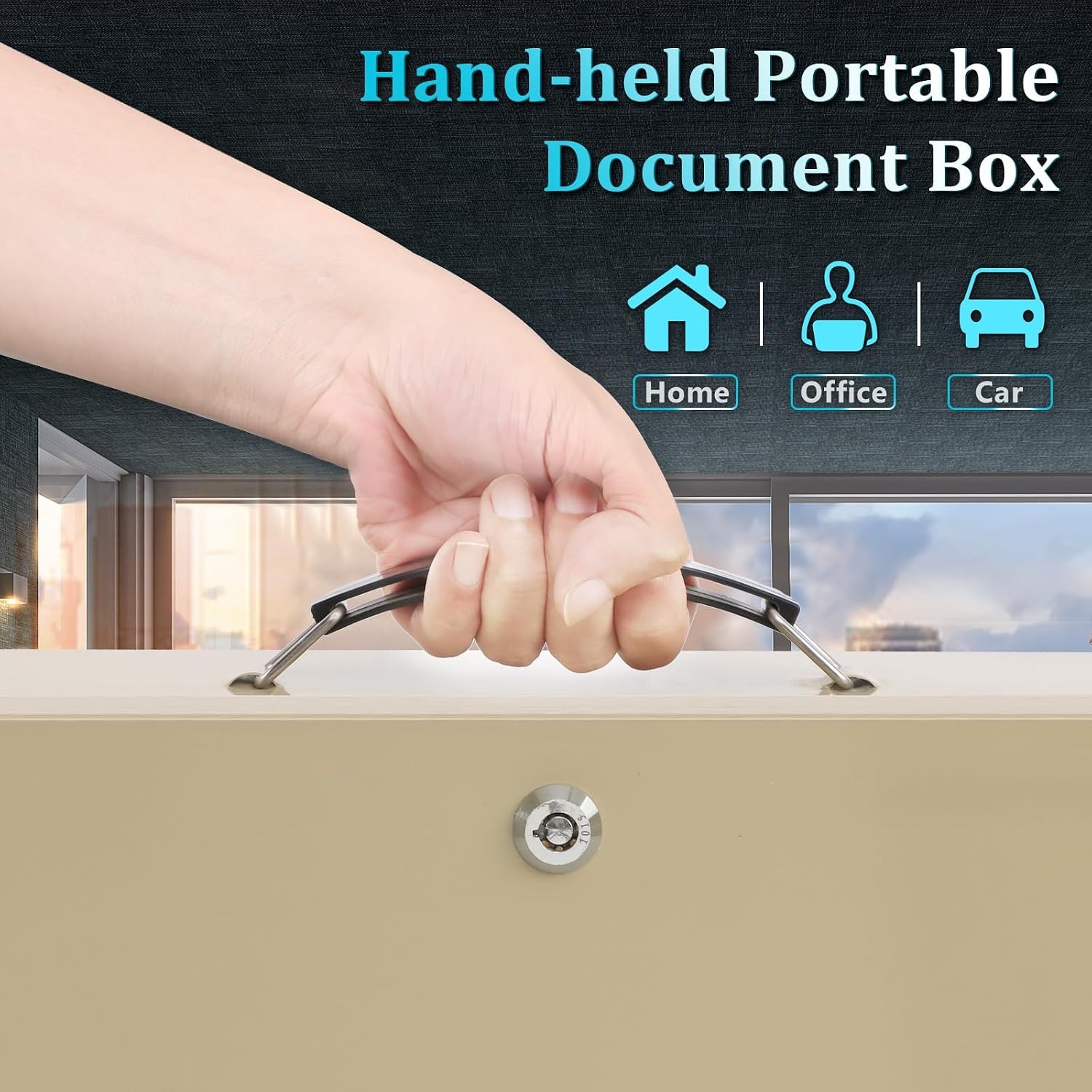
The exterior handle gives you a way to move the chest with its contents together. That can be useful when changing its storage location or bringing it to a table to sort papers.
Its listed empty weight is 3.18 kg. Add the weight of the contents before deciding whether it is comfortable to carry regularly. A handle makes a chest portable, but it does not make the loaded weight disappear.
The mounting type is listed as tabletop. No fixing kit or anchoring method is specified, so do not assume it can be secured to a wall or floor.
Choose a stable surface with enough room for the chest to sit fully supported. Check lid clearance as well as the footprint. A location that fits the closed box may still be awkward if a shelf above stops it opening properly.
Keep water exposure in mind
This chest is expressly listed as not water resistant. That is an important limit, especially when choosing a place to keep paper documents.
Avoid damp floors, areas beside sinks and locations where leaks are likely. Do not assume the lid or lock will stop spilled water from reaching the contents.
Fire resistance and water resistance are separate properties. A product described for one does not automatically offer the other. If you need protection from both, look for clear documentation of both features.
Good placement helps reduce everyday exposure, but it cannot turn this chest into a waterproof container. For documents that cannot be replaced easily, think about your wider storage plan as well as the box.
Set up a simple storage routine
Before loading the chest, read the user manual and check how the lock operates. Make sure you understand the opening and closing steps before placing important belongings inside.
Group contents in a way that makes sense to you. Keep papers you use often easy to reach, and avoid overfilling the chest. Nothing should need to be forced down for the lid to close.
For a cash storage chest, decide how you will keep notes and other small items separate. No fitted organiser is specified, so do not expect compartments that are not listed.
Keep a separate record of what you store if that would help your household. Avoid making the chest the only place where you keep information needed to access or identify its contents.
Care without guesswork
Basic care starts with keeping the chest clean and dry. Wipe the outside with a soft dry cloth, and avoid abrasive products that could damage the finish.
Do not immerse it or wash it under running water. Keep dirt away from the key opening, and avoid forcing the key if the lock feels stiff or catches.
Follow the manual for any maintenance advice. The maker does not specify a lubricant or servicing method, so it is better to ask than to apply a product that may be unsuitable.
Check that the lid is properly closed after use. A quick check of the lock and key is a useful habit before putting the chest back in its storage spot.
Buying for someone else
A lockable document storage chest can be a practical gift when the recipient has asked for somewhere to keep small belongings. It is worth checking what they actually want to store before choosing one.
Someone keeping passports may have different needs from someone filing full-size certificates. A person expecting tested fire protection will also need more information than the description supplied here.
For delivery in South Africa, us states that every order includes free delivery.
The supplied return information mentions full refunds for several return reasons. Check our current conditions and process rather than assuming a particular return window.
The short version
Choose this key-locking chest for its documented features: metal construction, an exterior handle, tabletop placement and physical key control. Its listed empty weight is 3.18 kg, and it is not water resistant.
Before ordering, resolve the conflicting size information and confirm that your belongings will fit. If tested fire protection or a specific security rating is essential, ask for supporting documentation or choose a model that clearly states it.