
The complete guide
How to Choose a Small Digital Safe for Everyday Valuables
A dedicated place for the things you want to keep together
Cash in one drawer, jewellery in another and important small items tucked out of sight can be hard to keep track of. A small digital safe gives those belongings a single storage place. It also adds a lock between them and anyone without the code or key.
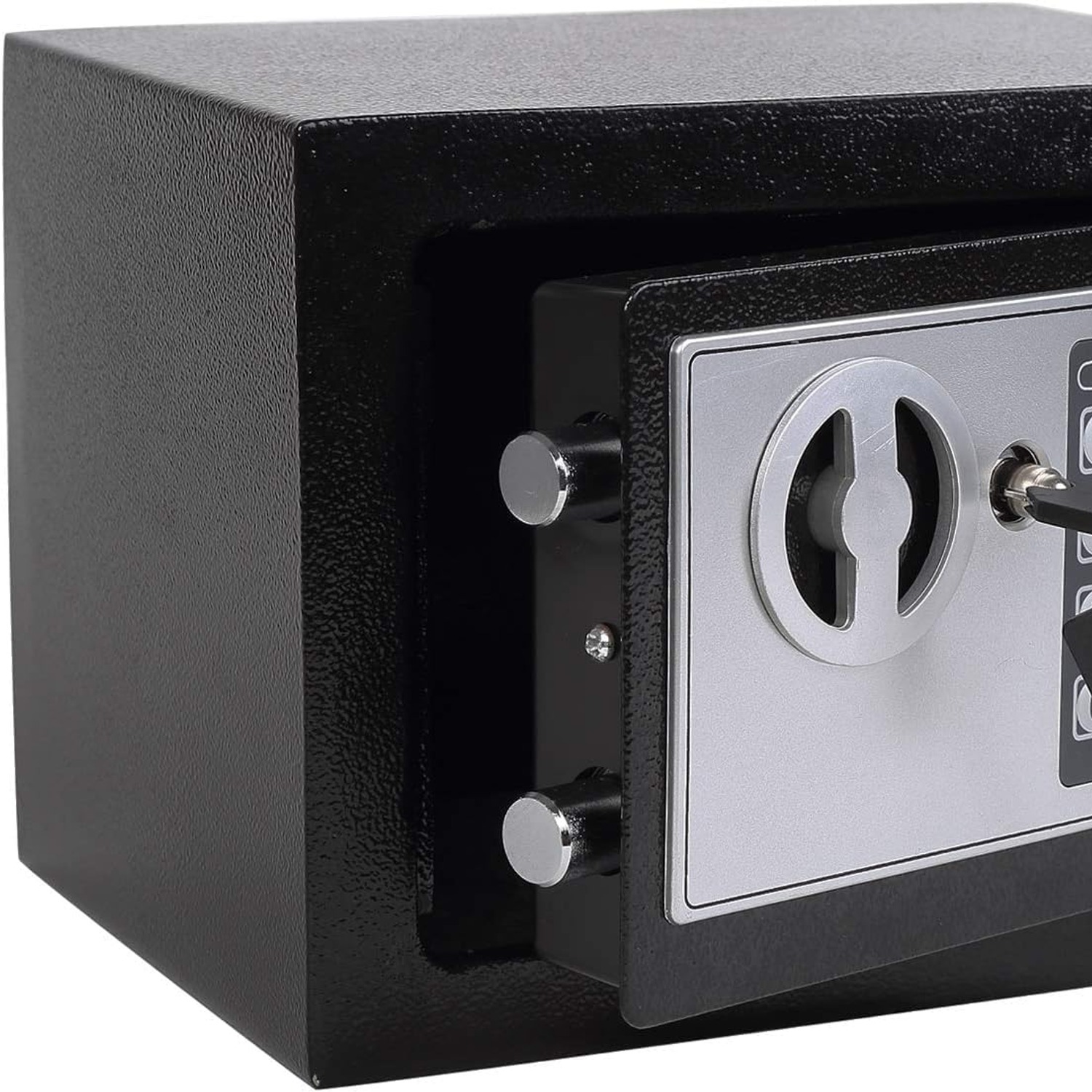
This model combines a 6 litre capacity with an electronic keypad and two emergency override keys. It is intended for home or office use, with wall and floor mounting listed as options.
The main question is whether its size and stated features match your needs. A compact safe can be useful, but it should not be mistaken for a fire-rated document safe or a product with a certified burglary resistance grade. Neither rating is given by the maker.
How the keypad and backup keys work
For everyday access, this personal code safe uses a keypad that accepts 3 to 8 digits. An internal reset button lets you change the code. Follow the supplied instructions when setting it up, and test the code several times with the door open before putting anything inside.
The keypad has indicators for a correct code, an incorrect entry and low batteries. An incorrect entry timeout alarm is also listed. The maker does not state how many failed attempts trigger it or how long the timeout lasts, so avoid guessing at those settings.
Two emergency override keys provide another way to open the safe. They are useful only if you can reach them when needed. Keeping both inside the locked safe would defeat their purpose.
Choose a secure, separate place for the keys. If another trusted person needs emergency access, agree on arrangements without leaving the code or keys in an obvious spot beside the safe.
Check the measurements before choosing a location
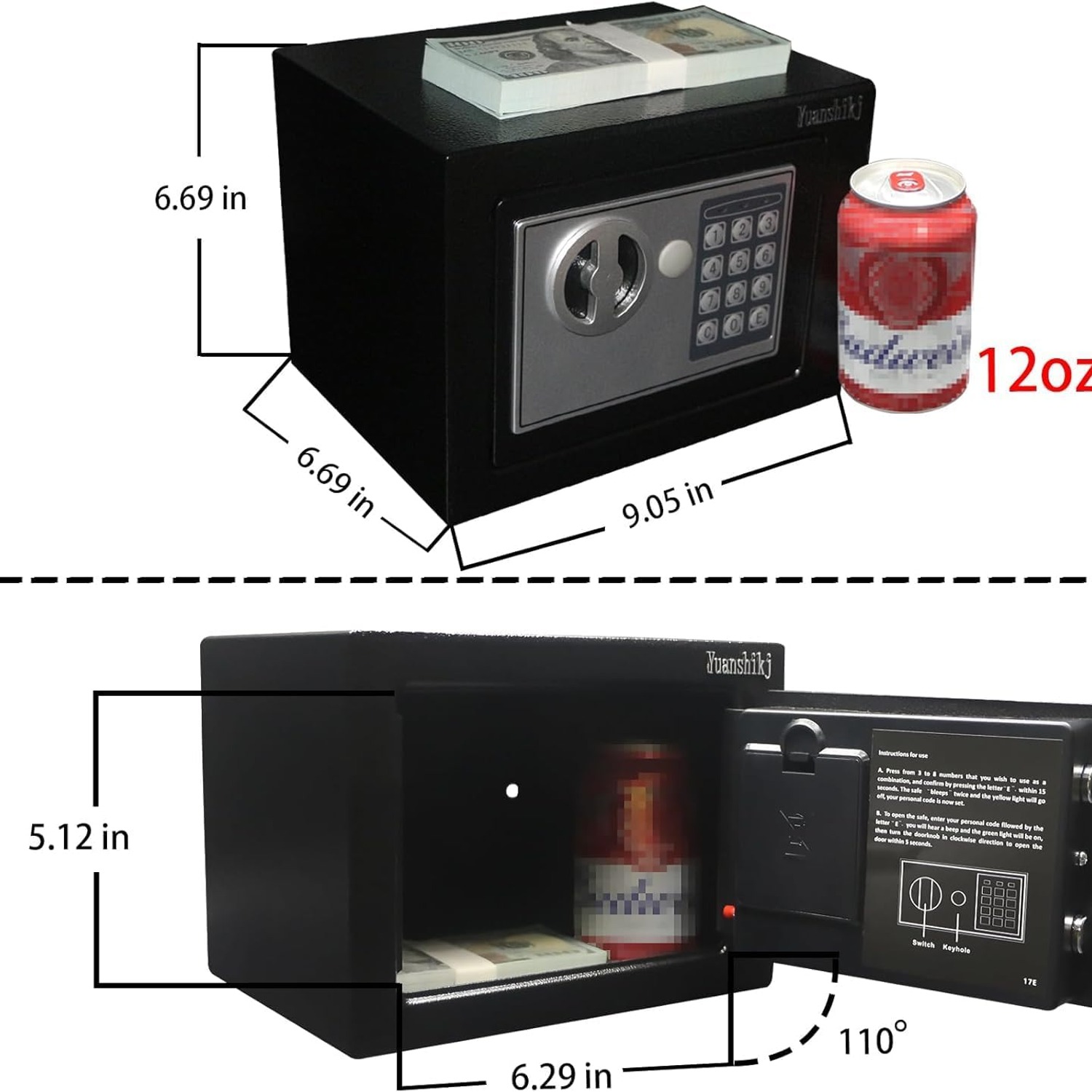
The structured dimensions are 17 x 23 x 17 cm, and the listed weight is 3 kg. These figures provide a starting point for checking a shelf, cupboard or intended mounting area.
There is a measurement conflict in the maker reference text, where one passage gives a different external size. If you are fitting the safe into a close space, confirm the dimensions before ordering. A little spare room is better than discovering that a door frame or shelf edge blocks access.
You also need working space in front of the safe. It is not enough for the box alone to fit. Think about reaching the keypad, inserting an override key and opening the door far enough to remove your belongings.
Make a simple outline of the stated footprint on paper or card. Place it where you plan to install the safe, then consider how you will use it from day to day. This can reveal awkward positions before any drilling starts.
Understand what a 6 litre safe can hold
Capacity is useful for comparing products, but it does not tell you whether a particular object will fit. A 6 litre safe has limited room, and some of that space must remain clear so items do not interfere with the door or bolts.
The chamber depth is listed as 16 cm. Full internal width and height are not provided. Do not treat the outer measurements as usable storage measurements, especially for rigid boxes or document folders.
For a small safe for cash, consider how you keep notes together. For jewellery, measure the pouch or case you plan to use, not just the jewellery itself. A bulky presentation box can take up more room than expected.
If documents are your main concern, confirm their size carefully. The maker mentions document storage, but it does not establish that full-size sheets fit flat. Choosing a larger safe may make more sense than folding papers you need to keep in good condition.
What the steel construction tells you
The product specifications describe steel construction and solid steel bolts. These are the stated enclosure and locking features. Steel thickness, tested attack resistance and a certified burglary grade are not given by the maker.
That distinction matters when choosing a compact steel safe. A description of the material is not the same as proof of performance under a recognised test. Avoid assuming that a small locked box meets requirements set by an insurer or a business policy.
If you plan to store high-value jewellery or significant sums of money, ask your insurer what protection they require. They may need a particular rating or installation method. Match the product to those requirements rather than relying on appearance, weight or keypad features alone.
This safe is better assessed on the facts available: its size, access methods, mounting options and listed construction. Where a protection figure is missing, leave it as unknown.
Wall mounting or floor mounting
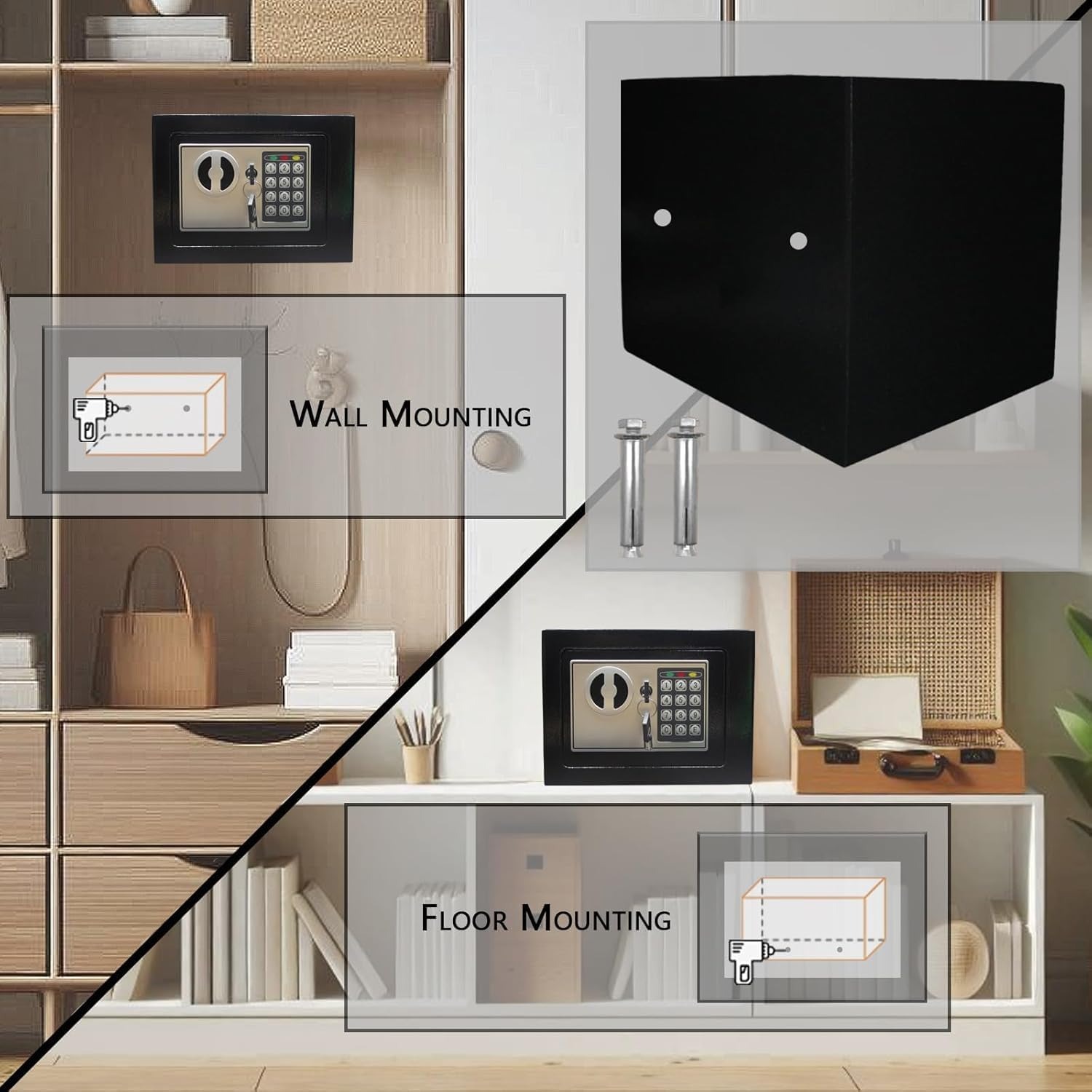
Both wall and floor mounting are listed for this model. Which option makes sense depends on the building surface, available access and how you plan to use the safe.
A convenient location is not always a suitable fixing point. Thin furniture panels, plasterboard and solid masonry need different approaches. The maker does not specify mounting hardware, fixing sizes or the exact hole arrangement.
Check the supplied installation guidance before drilling. If you are unsure about the supporting surface or possible pipes and cables, get suitable professional advice. Renters should also check whether they have permission to make permanent fixings.
Position matters for daily use too. A floor mount safe may require bending or kneeling, while a wall mount safe must sit at a reachable height. Make sure you can read the keypad and handle the contents without strain.
Battery care and reliable access
This battery operated safe uses AA batteries. The required quantity and whether batteries are included are not specified, so check before setup. Use the battery type and fitting method given in the supplied instructions.
The low battery alert is a useful reminder, not something to ignore until the keypad stops responding. Replace batteries when prompted and keep the override keys available in their separate secure location.
After changing batteries or resetting a code, test normal operation before closing the door on your valuables. An open-door test helps you catch a setup mistake without creating an access problem.
Avoid repeated random code attempts if you forget the code. The safe has a listed incorrect entry timeout feature, but its timing is unknown. Refer to the instructions and use the approved access method rather than forcing the handle or door.
Choose a dry place and keep care simple
This safe is explicitly listed as not water resistant. Choose a dry indoor position away from likely splashes, damp floors and pipes that could leak. A hidden spot is not a good choice if moisture regularly collects there.
No fire rating is stated either. If your main concern is protecting papers from a house fire, look for a product with a documented rating suited to that purpose. This keypad safe box should not be presented as providing that protection.
Routine care can stay simple. Wipe the outside with a soft, dry cloth, and keep liquids away from the keypad and battery area. Do not spray cleaner into openings.
Keep stored items clear of the bolts and door edge. If the door resists closing, check for an obstruction rather than pushing harder. For delicate jewellery, consider a suitable pouch because a protective interior lining is not confirmed.
Decide whether it suits your household or office
A home office safe can help create a consistent place for small valuables. The same is true in a bedroom or shared household, provided access arrangements are clear and the installation suits the space.
Think about who needs to open it. A personal code avoids carrying a key for each routine visit, but everyone who knows that code has access. Change it when access needs change, following the instructions.
For gifting, focus on practical fit rather than surprise alone. The recipient needs room for the safe and a suitable place to use it. They should also set their own private code and decide where to keep the emergency keys.
If several people need separate access records or individual user codes, confirm those features elsewhere before buying. They are not specified for this model. A straightforward keypad does not establish that those controls are available.
Check the order details before committing
Before purchase, confirm any missing details that affect your setup. Battery quantity, mounting hardware and full internal measurements are not given by the maker. A warranty is also not specified.
Delivery timing should be checked for your address at checkout.
The captured maker's details mention full refunds for defective, damaged, wrong or missing items. Your purchase is governed by our delivery and returns pages' current terms, so check its return window and contact process. Keep the packaging until you have inspected the safe and tested its operation.
The short version
Choose this small digital safe if you need compact storage with a programmable keypad, backup keys and listed wall or floor mounting options. Its stated capacity is 6 litres, with a weight of 3 kg.
Measure first, confirm any tight-fit dimensions and plan a dry installation. Keep the override keys separate and respond to battery warnings. If you need rated fire protection, water resistance or certified burglary protection, choose a safe with those requirements clearly documented.