

The complete guide
Choosing a Cash Box With Tray for Everyday Cash Handling
Give every coin and note a place
Loose change can turn a simple sale into an awkward pause. You search for the right coin, unfold a note and try to keep receipts from getting mixed into the takings. At a busy stall or shared counter, that small delay soon becomes frustrating.
A cash box with tray gives each part of the transaction a home. Coins go into divided slots, notes sit in their own sections, and paperwork can stay apart from the working change. The aim is a routine that is easier to follow, even when someone else takes over.
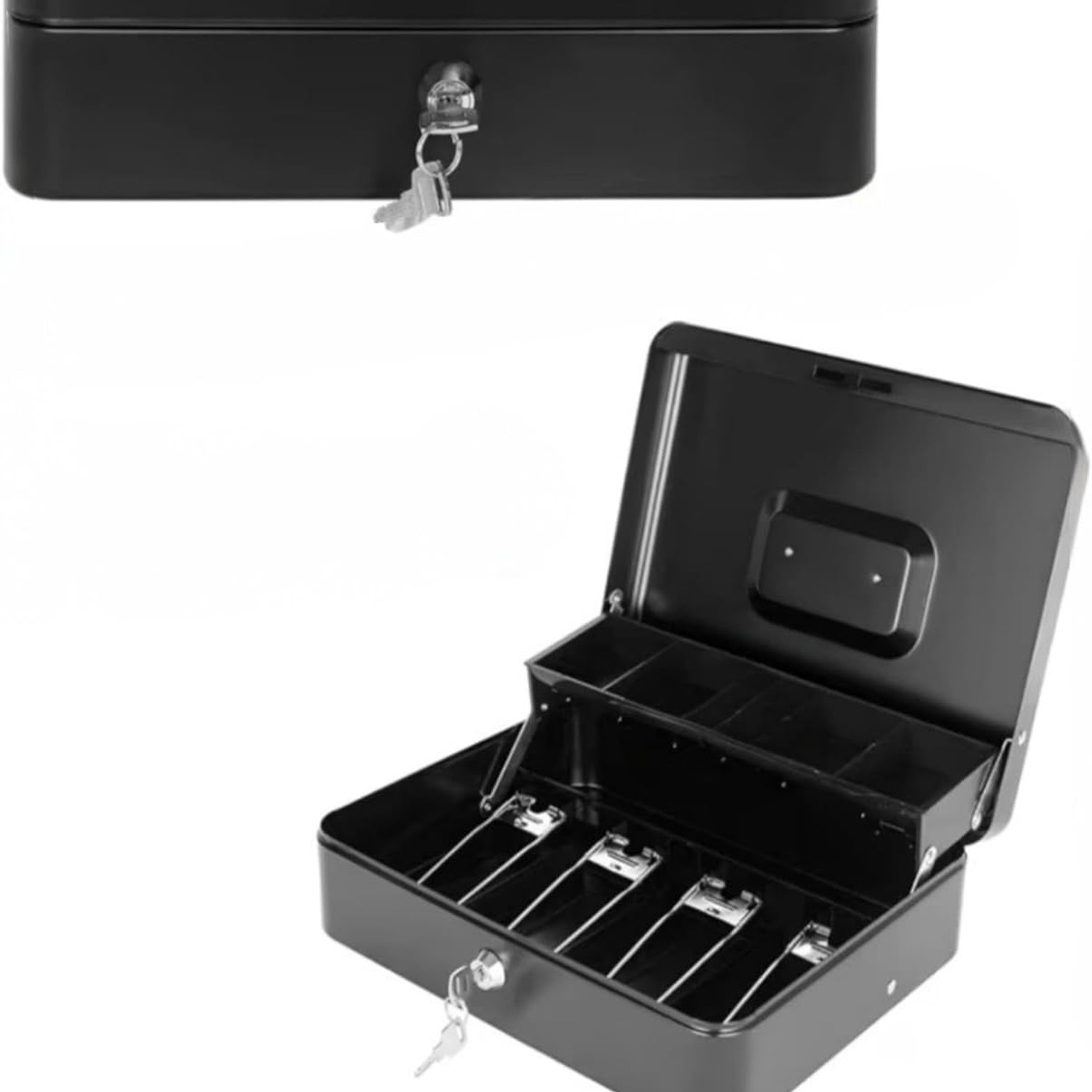
This box uses a two-tier layout with five coin slots and four note sections. It also has bottom storage, a key lock and a carrying handle. Those details make it worth considering for everyday cash handling, but fit and working habits still matter.
How the tiered layout works
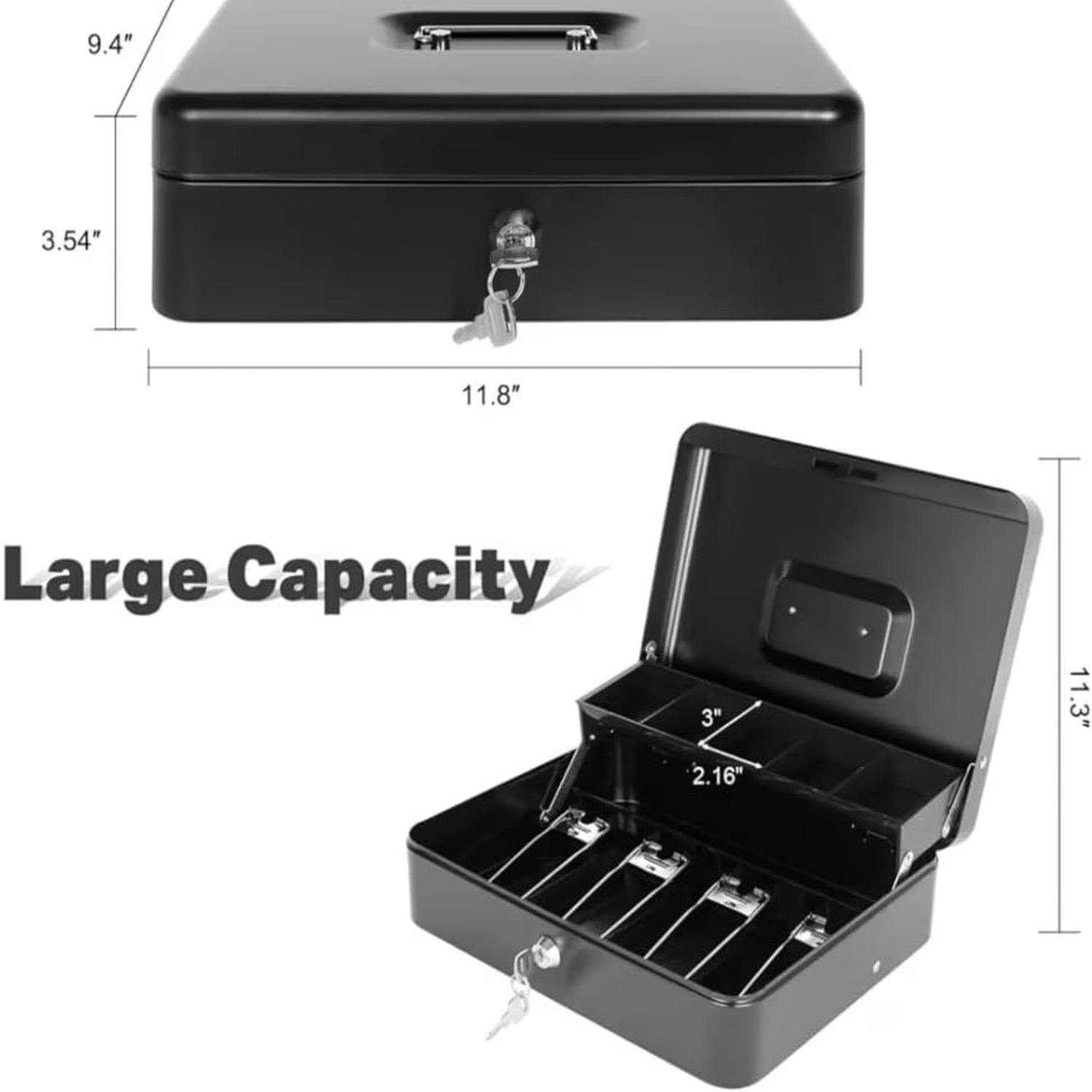
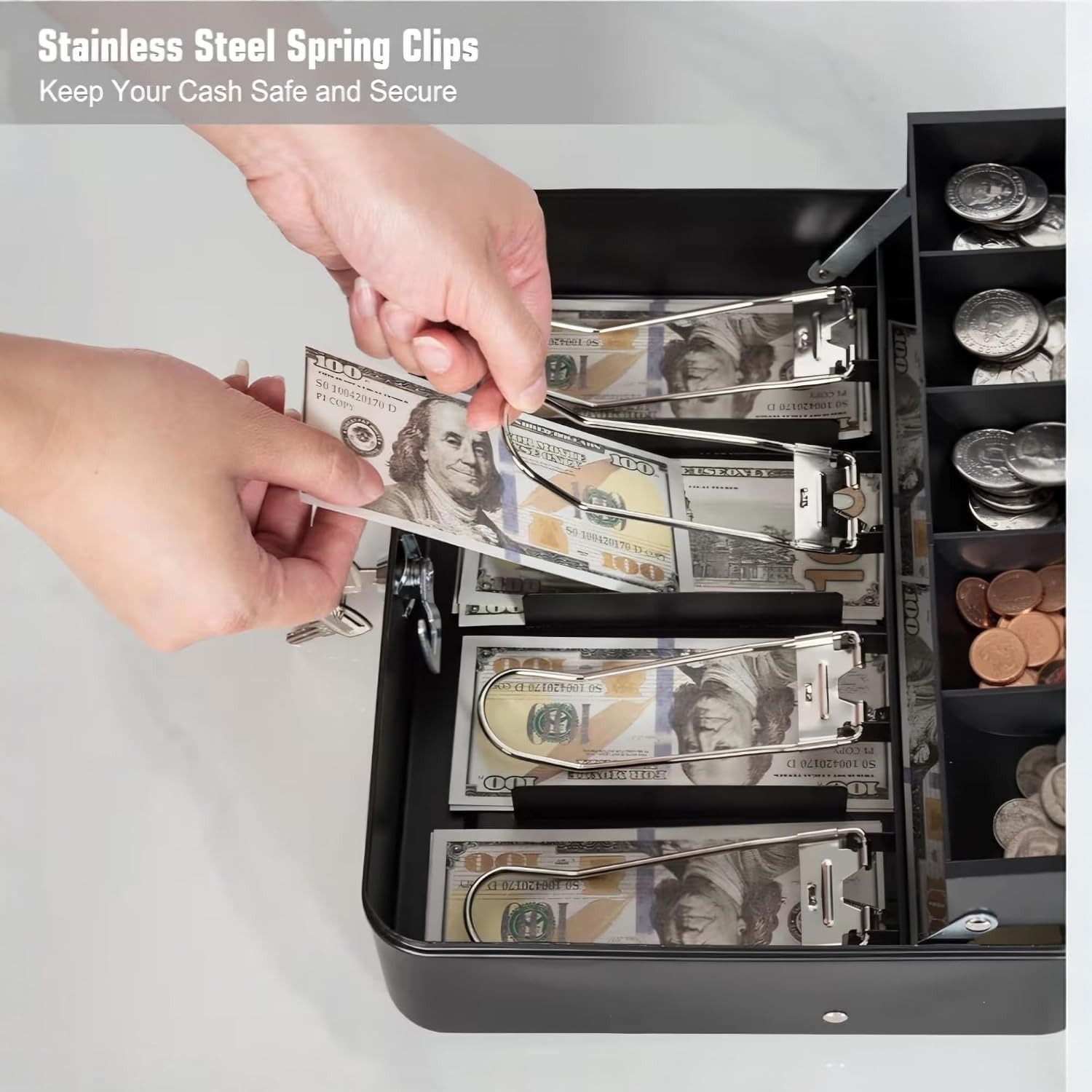
The upper coin tray separates change into five slots. Below it, four sections hold notes, with spring clips to help keep them in position. Extra space at the bottom is described for receipts, cheques and coin rolls.
That arrangement makes sense when you want working cash close at hand without mixing every item together. You might keep frequently used coins in the easiest slots to reach and assign each note section a clear purpose.
Five coin slots will not necessarily give every denomination its own compartment. Think about the coins you actually use rather than the full range in circulation. If you regularly need more separate groups, decide how you would manage the overflow before buying.
The same applies to the four note sections. A useful layout is one that matches your sales, not just one that looks tidy when empty.
Check the size against your space
The listed dimensions are 24 x 30 x 9 cm. Mark that footprint on your counter or table with paper before ordering. This gives you a better sense of the space it will occupy beside stock, bags, a calculator or a payment device.
Also think about the box while it is open. You need room to reach the tray and note sections without knocking nearby items. The maker does not give an open-lid clearance measurement, so leave extra space rather than planning a tight fit beneath a shelf.
Internal compartment sizes are not given by the maker. The outer dimensions alone cannot confirm whether a particular banknote, envelope or receipt book will fit neatly inside.
If currency fit is important, ask for the note-section measurements before purchasing. That is more reliable than assuming any cash box will suit every country's notes.
What the note clips add
Four spring clips help keep banknotes in their sections. This is useful at an outdoor sale, where a breeze can lift loose notes while you are counting change or speaking to a customer.
A cash box with note clips still needs sensible placement. Use a level surface, keep it within reach and avoid leaving notes loose on the lid or table. Clips can only help with the notes placed beneath them.
Practise your cash routine before a busy session. Work out how you will lift a clip, place a note and take change without mixing sections. A few quiet minutes at the start can reveal whether your chosen arrangement feels natural.
Avoid packing notes so tightly that the clips or lid need force. No maximum note count is stated, so use the closing action as a practical check rather than aiming for an assumed capacity.
Choose it for the right kind of work
A petty cash box needs a clear layout and a repeatable record-keeping routine. This model provides separate coin and note areas, plus room below for supporting paperwork. Pair that with a cash log so each payment has an explanation.
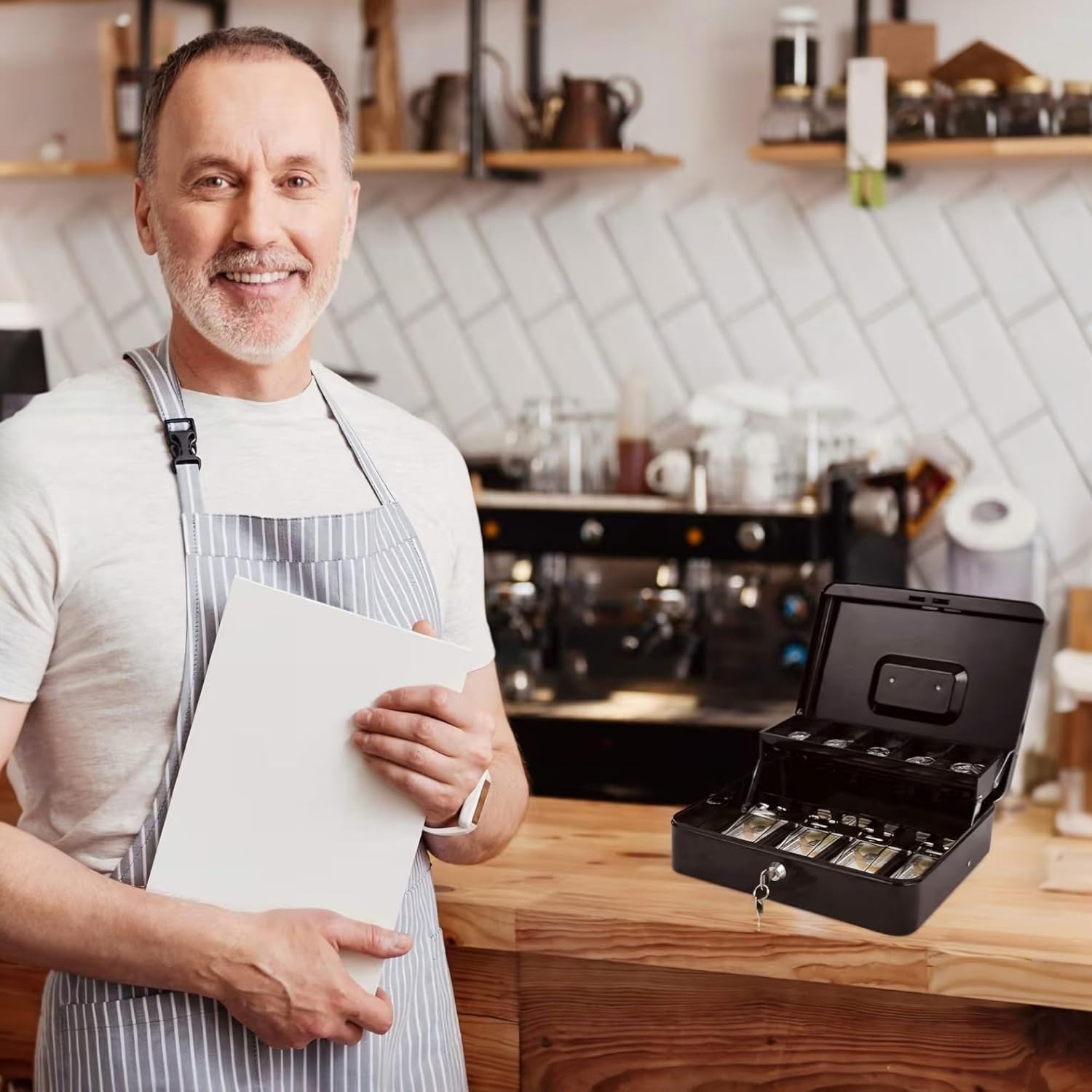
For a market stall, the main question is how much change you need during a normal session. Four note sections may suit your setup, or you may need more separation. Plan around the denominations customers tend to hand over.
An event cash box may be used by several people during the day. Agree on the compartment layout before opening, and make sure each person knows where receipts belong.
At home, the same box can keep household cash and related records together. Keep its purpose clear so that savings, spending money and receipts do not become another mixed pile.
Understand what the key lock does
This is a key lock cash box with a mechanical lock and two supplied keys. Closing and locking it gives routine cash storage a clear boundary. It also helps you control who has ordinary access to the contents.
That is different from a stated level of protection against theft. No burglary rating, fire rating or security certification is supplied. The box should not be treated as a rated safe or selected to meet an insurance requirement without further evidence.
Because it is portable, think about where it goes when trading stops. Avoid leaving it visible in an unattended selling area or vehicle. Move cash to suitable secure storage as part of your closing routine.
Keep the spare key away from the box. A spare locked inside is no help when the working key is lost.
Plan for carrying it
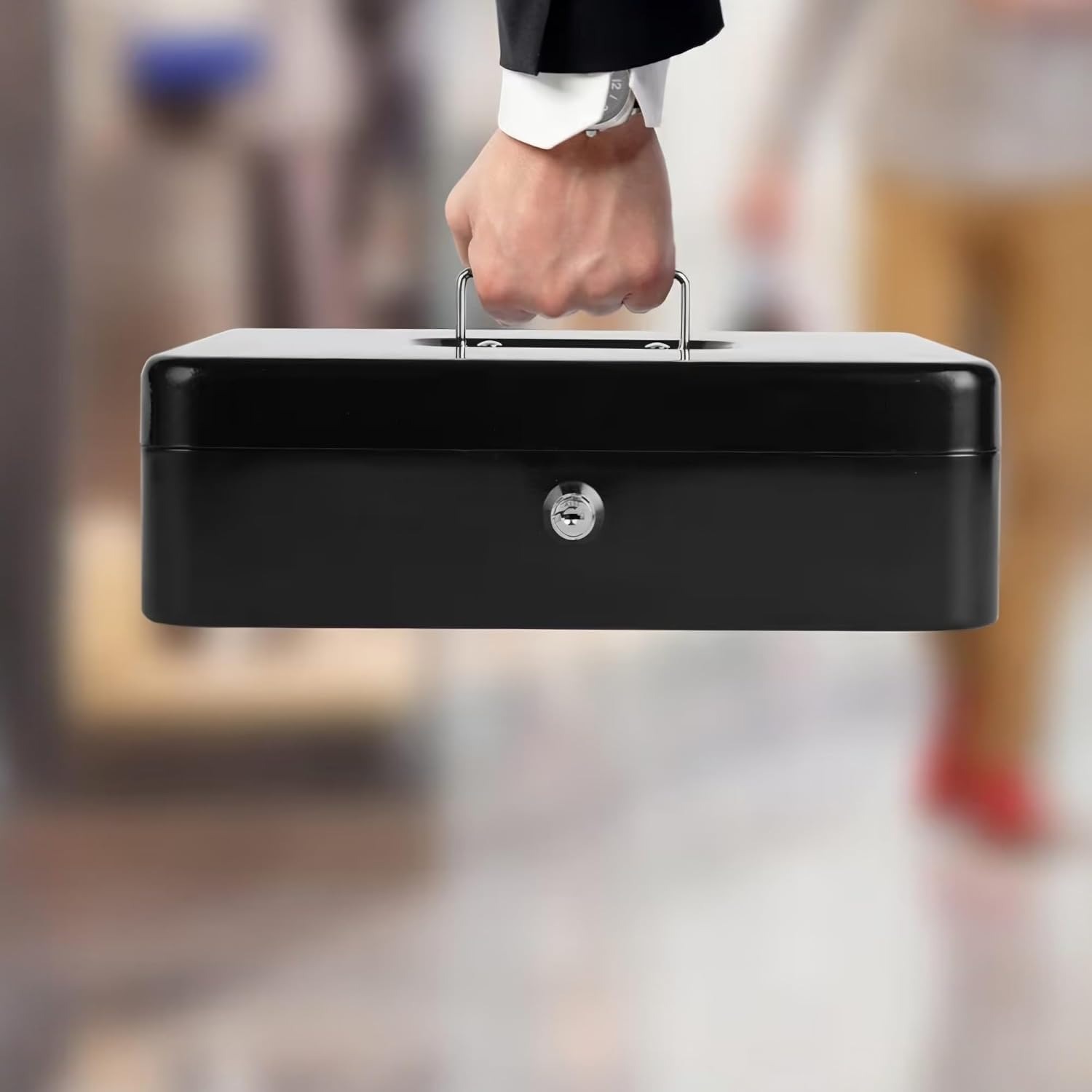
The listed empty weight is 1.8 kg, and the box has a stainless steel carrying handle. Coins can add noticeable weight, so consider the loaded box rather than the empty figure alone.
This matters if you walk from a parking area to a market pitch or move between rooms during an event. Carry only what you need, and check that the box is closed and locked before lifting it.
Do not assume that loose contents will stay in their assigned places during every journey. Once the box is on a level work surface, check the tray and note sections before starting.
If you need to carry other stock at the same time, plan the trip in advance. A portable cash box is still one more item to hold and keep track of.
Keep receipts useful, not just stored
The extra bottom space can hold receipts, cheques and coin rolls. That is helpful only if the contents remain easy to sort at the end of the day.
Choose a simple rule for paperwork. For example, put paid-out receipts together and keep them separate from unused slips. Avoid dropping unrelated items into the box just because there is room.
As paperwork builds up, check that it does not obstruct the tray or closing edges. The storage capacity is not stated, and the bottom area should not be treated as unlimited space.
At closing time, compare the receipts with your record before filing them elsewhere. A receipt storage box can keep papers together, but it cannot replace a clear account of what came in and went out.
Materials and everyday care
The product description lists metal, stainless steel and plastic construction. It identifies the handle and spring clips as stainless steel, and the box is described as black.
Those details do not establish weather resistance. Keep it sheltered during outdoor use, and do not leave it exposed to rain or pooled water. A covered table is a better working spot than an open surface when the weather is uncertain.
For cleaning, empty the box and wipe it with a soft cloth. Dry it afterwards, and avoid allowing moisture into the lock. Remove loose debris from the tray and around the clips so it does not interfere with use.
Check that nothing is caught along the closing edge. If the lid does not close easily, look for trapped notes or overfilled storage rather than forcing it shut.
Make the decision around your routine
Before choosing a money organiser box, walk through one normal transaction. Where will the customer's note go? Which coins will you need for change? Where does the receipt belong?
Then picture the end of the session. You need to count the balance, record any difference, gather the paperwork and put the keys somewhere known. A useful cash box supports that whole routine, not just the moment of payment.
This model offers five coin slots, four clipped note sections and bottom storage within a 24 x 30 x 9 cm box. The main unanswered questions are internal fit, maximum capacity and delivery timing. Check any of those that could affect your plans before ordering.
The short version
Choose this tiered cash box if its layout matches the cash you handle and its footprint suits your work area. The coin tray, note clips and lower storage give everyday takings a clear place.
Treat the lock as part of careful cash handling, not a substitute for secure storage. Set up the compartments, keep the spare key separate and finish each session with a count. Those habits help make a simple box genuinely useful.