
The complete guide
How to Choose a Compact Safe for Small Valuables
Loose cash in one drawer, jewellery in another and spare keys somewhere else can make small belongings hard to keep track of. A compact safe box gives those items a single lockable home. It can help you organise what matters without setting aside space for a large cabinet.
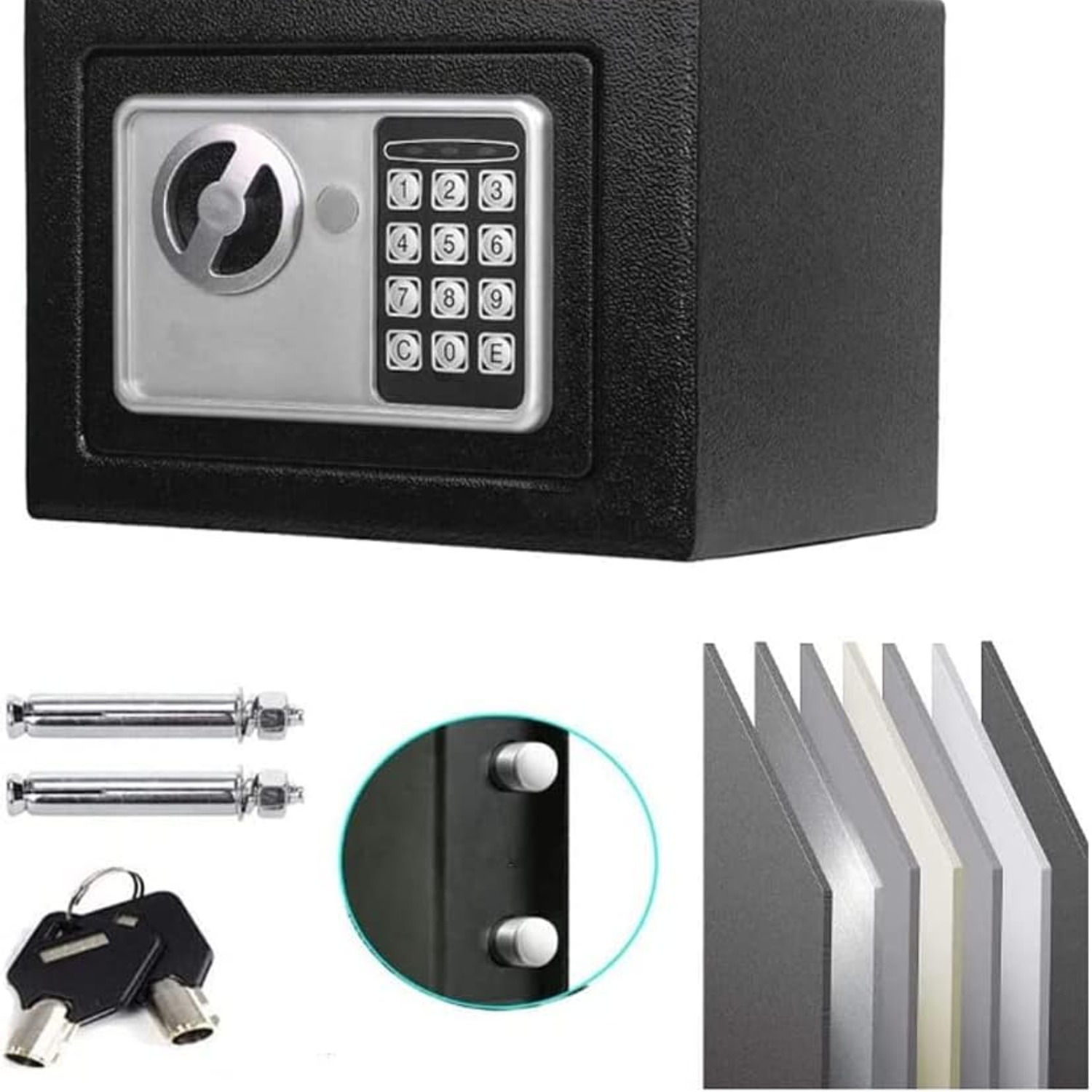
The important part is choosing it for the job it can actually do. Size, access and installation all matter, but so does knowing what has not been tested or stated. This model offers a listed 4.6-litre capacity, electronic PIN access and an override key. Here is how to decide whether that combination fits your needs.
Start with what you want to store
Before looking for a small home safe, gather the items you expect to keep inside. Lay them out together rather than guessing from memory. A few pieces of jewellery and folded notes take up a different amount of room from boxed watches or a bundle of papers.
Think about the items you use often as well as those you rarely touch. If you need something every morning, it should be easy to reach without emptying the safe. Leaving a little space also helps you see what is inside.
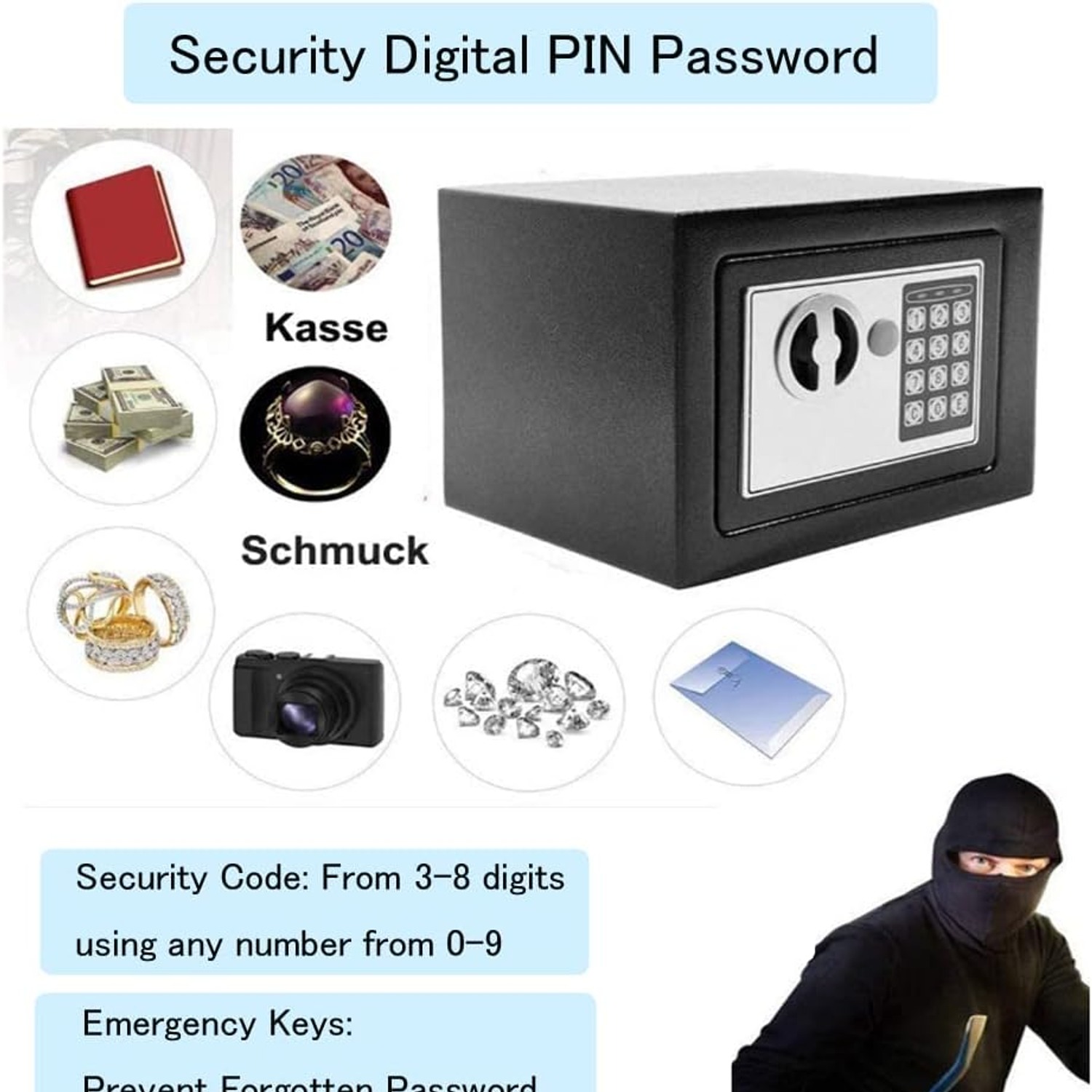
This safe is described for small valuables such as cash and jewellery. That does not mean every item in those groups will fit. A jewellery presentation box, for example, may take up much more room than its contents.
Check dimensions before choosing a spot
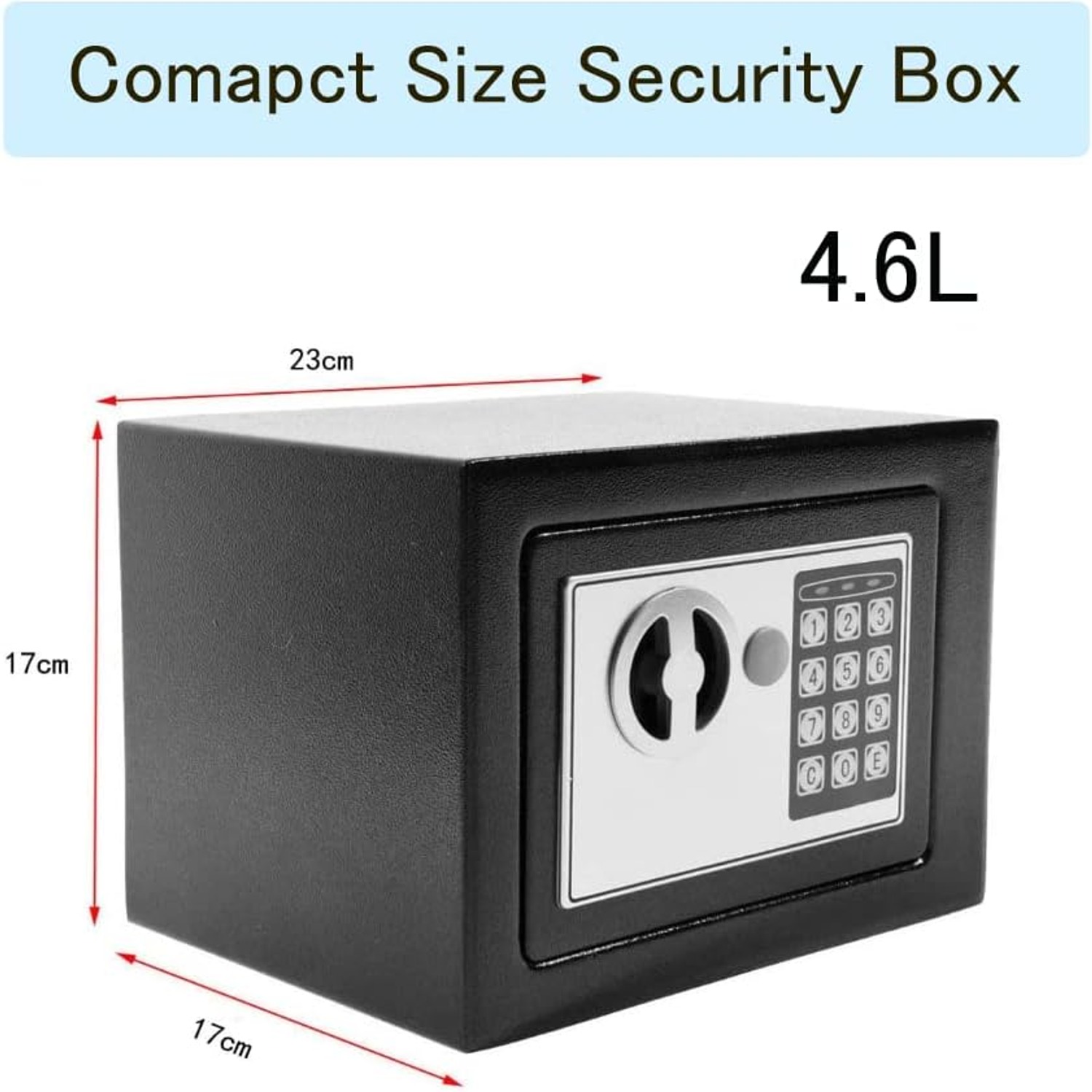
The listed measurements are 17 x 23 x 17 cm. The maker also states a 4.6-litre capacity. These figures give you a starting point, but they do not tell you the exact usable space inside.
The door, body and locking parts take up room. Usable internal dimensions and the width of the opening are not provided. If you have an item that is close to the listed size, ask for internal measurements rather than relying on capacity alone.
Measure the intended location too. Allow space to open the door and reach the keypad comfortably. A shelf may be deep enough for the body but awkward to use once a cupboard door or nearby object gets in the way.
A paper outline of the listed footprint can help you picture the position. It is a simple way to spot a crowded shelf before buying.
Understand the two access methods
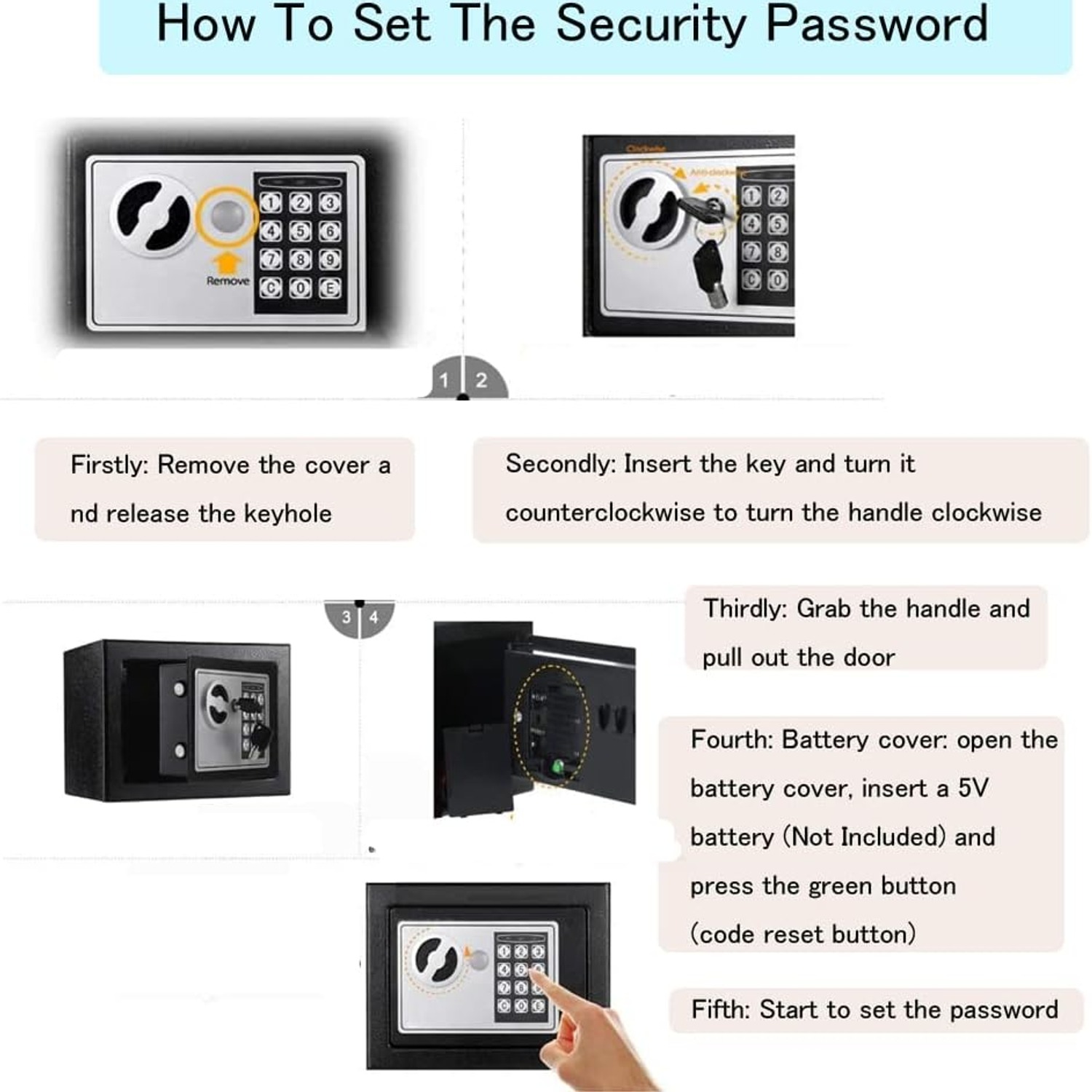
This digital safe box uses an electronic PIN and an override key. The PIN can contain 3 to 8 digits. Follow the supplied manual when setting it, changing it or checking that the code has been saved.
Key access matters because batteries do not last forever, and codes can be forgotten. A safe with override key access offers another route into the compartment in those situations. That benefit depends on keeping the keys somewhere you can reach.
Do not store every key inside the safe. Choose a separate secure location, and make sure anyone who is meant to have access knows the arrangement.
At setup, test the code and key while the door is open. Repeat the checks before putting belongings inside. Taking a few minutes at the start is easier than dealing with uncertainty after closing the door.
Plan for battery use and lockouts
The electronic lock requires four AA 1.5 V batteries, supplied separately. Have them ready for setup and follow the manual's directions for installation and replacement.
The maker describes a temporary lockout after three incorrect PIN attempts. It gives a period of 3 to 6 minutes, rather than one exact duration. Check the manual supplied with the unit for the correct procedure if this happens.
If the code is not working, pause rather than entering guesses in quick succession. Check that you are following the operating steps before trying again.
An acoustic alarm is also listed, but the maker does not explain its trigger conditions or volume. Do not choose this electronic keypad safe on the assumption that it includes a particular intrusion alarm function.
Decide whether you will mount it
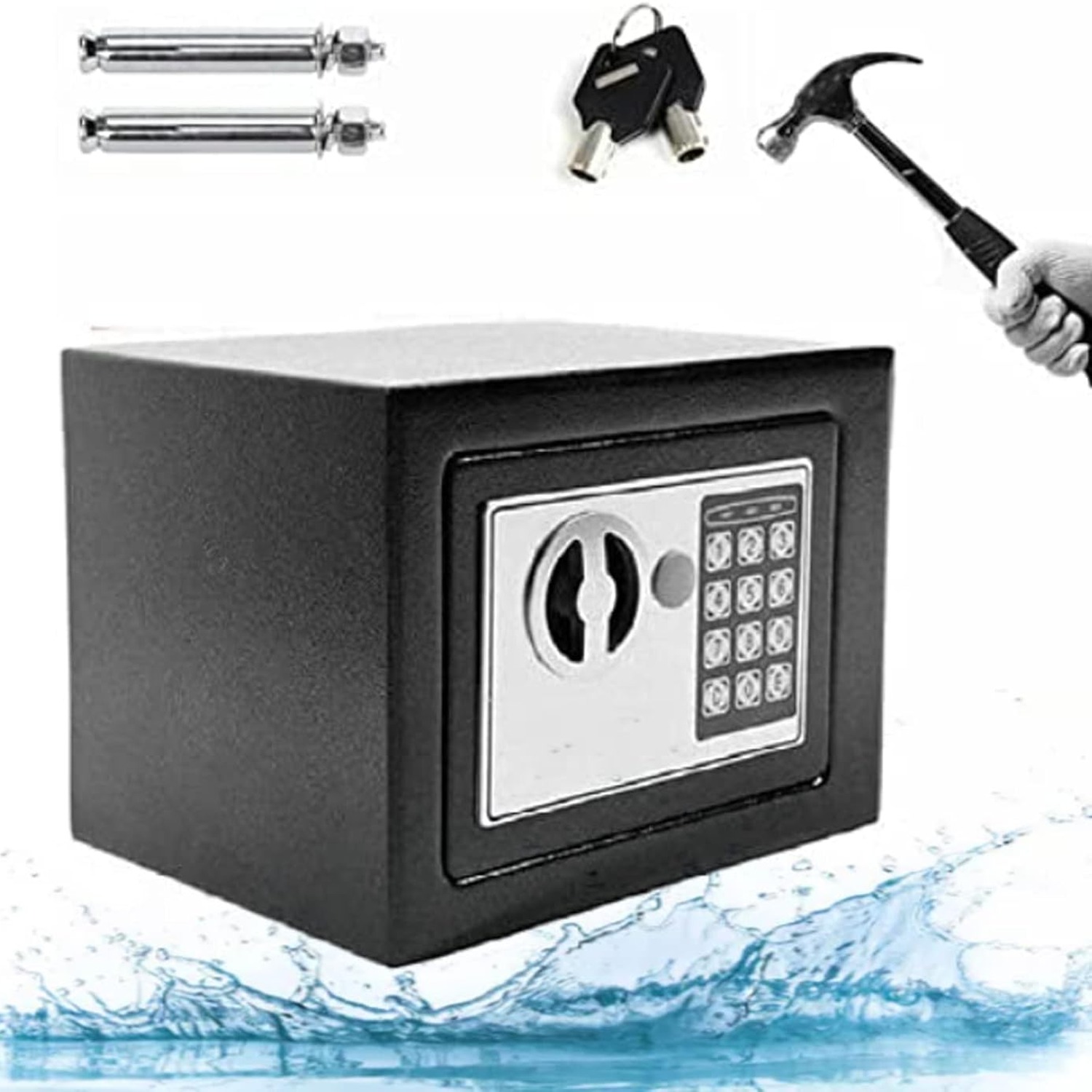
Wall mounting is listed, and the description mentions rear mounting holes. The maker text also refers to fixing the safe to a cabinet or floor. The right approach depends on the surface and the installation instructions.
A small safe left loose can be moved. Anchoring addresses that concern, but only when the surface and fixings are suitable. A weak cupboard panel is not the same mounting base as a sound structural surface.
The maker mentions bolts without giving a clear, usable size. Check what arrives in the package and whether it suits the intended surface. Do not assume every included fixing is right for every wall.
Before drilling, check for hidden cables or pipes and get help if you are unsure. If you rent, seek any permission needed before making holes. It is worth deciding this before purchase rather than leaving installation unresolved.
Match protection claims to your risks
A small steel safe should be judged on documented protection, not its appearance. The product details list alloy steel, but no certified burglary resistance grade is supplied. There is also no stated insurance approval.
That distinction matters if you are storing high-value items. An insurer may have specific requirements for the safe, installation and value of its contents. Ask about those requirements before choosing a model.
The maker's description calls this product waterproof, but supplies no test rating or exposure limits. That is not enough to establish protection against a flood, immersion or prolonged water exposure.
No fire rating is stated either. If your main concern is fire or flood damage, look for documented testing that matches that concern. A lockable box and a rated protective safe are not interchangeable.
Think about everyday use
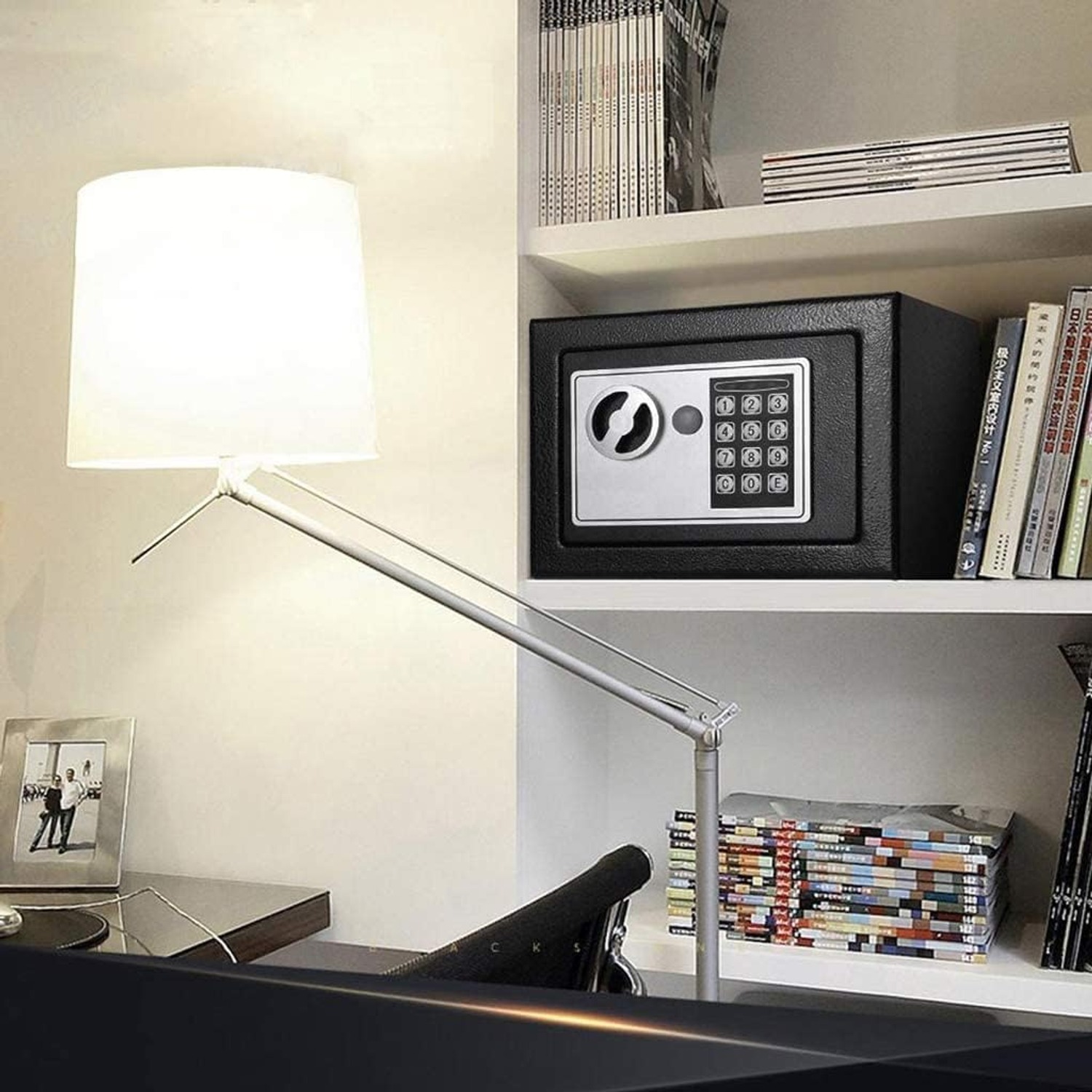
A mini security safe is most useful when its location works with your routine. You need to reach the keypad, see the controls and open the door without moving half a shelf of belongings.
Privacy matters too. Avoid entering your PIN where it is easily watched. Choose a code that is not obvious to people who know you, and share it only with those who should have access.
For shared use, agree on who can change the code and where the backup keys will be kept. Clear arrangements help prevent accidental lockouts.
This model may suit a compact office safe role for small personal belongings. It should not be treated as a substitute for workplace cash-handling rules or storage requirements. Check those separately if you plan to use it at work.
Organise the interior with care
A velvet cushion is included for the base. It gives belongings a softer resting surface, but it does not stop items from touching or moving against each other.
For jewellery, small pouches can help keep pieces apart. For cash storage, keep notes tidy and avoid packing the interior so tightly that contents press against the door.
Be careful with papers near the opening. Loose corners can get caught when closing a small door. Check that everything sits fully inside before locking it.
If you plan to add a tray, pouch or document sleeve, include that extra bulk in your size check. Storage accessories can use a surprising share of a 4.6-litre compartment.
Keep maintenance simple
Wipe the outside with a soft, dry cloth. Keep liquids away from the keypad, key opening and battery compartment. A water-resistance claim is not a reason to wash the safe or spray it with cleaner.
Check battery condition at sensible intervals and follow the manual for replacement. If the safe will be unused for a long period, consult the instructions for battery storage advice.
Pay attention to the door area as well. Make sure belongings are not blocking closure, and do not force the door against overfilled contents. If operation changes, check the instructions before trying to adjust the mechanism.
Keep the manual somewhere accessible outside the safe. Setup and recovery instructions are most useful when you do not need to open the door to read them.
Check the purchase details
Before ordering, confirm the current delivery estimate for your address.
Read our delivery and returns pages return policy too. The maker mentions full refunds for wrong, missing, defective or damaged items, but the applicable process and time limits need to be checked with us.
No warranty period is stated. If warranty cover affects your decision, ask for the terms before buying. It is better to resolve that question while comparing options.
For a gift, focus on practical fit. The recipient will need somewhere suitable to place it and should set their own PIN privately.
The short version
Choose this compact safe box if the listed size, 4.6-litre capacity and PIN-plus-key access match your small-item storage needs. Measure first, plan the mounting and keep the override keys separate.
If you need confirmed internal dimensions, a fire rating or certified burglary protection, get that information before committing. The right safe is one whose stated features match the job you need it to do.