
The complete guide
A Practical Buying Guide to a Compact Electronic Safe
A dedicated place for the things you want to keep private
Small valuables often end up spread across drawers, bags and bedside tables. That makes them harder to find and leaves access to chance. A compact electronic safe gives those items a set place and puts a lock between them and casual access.
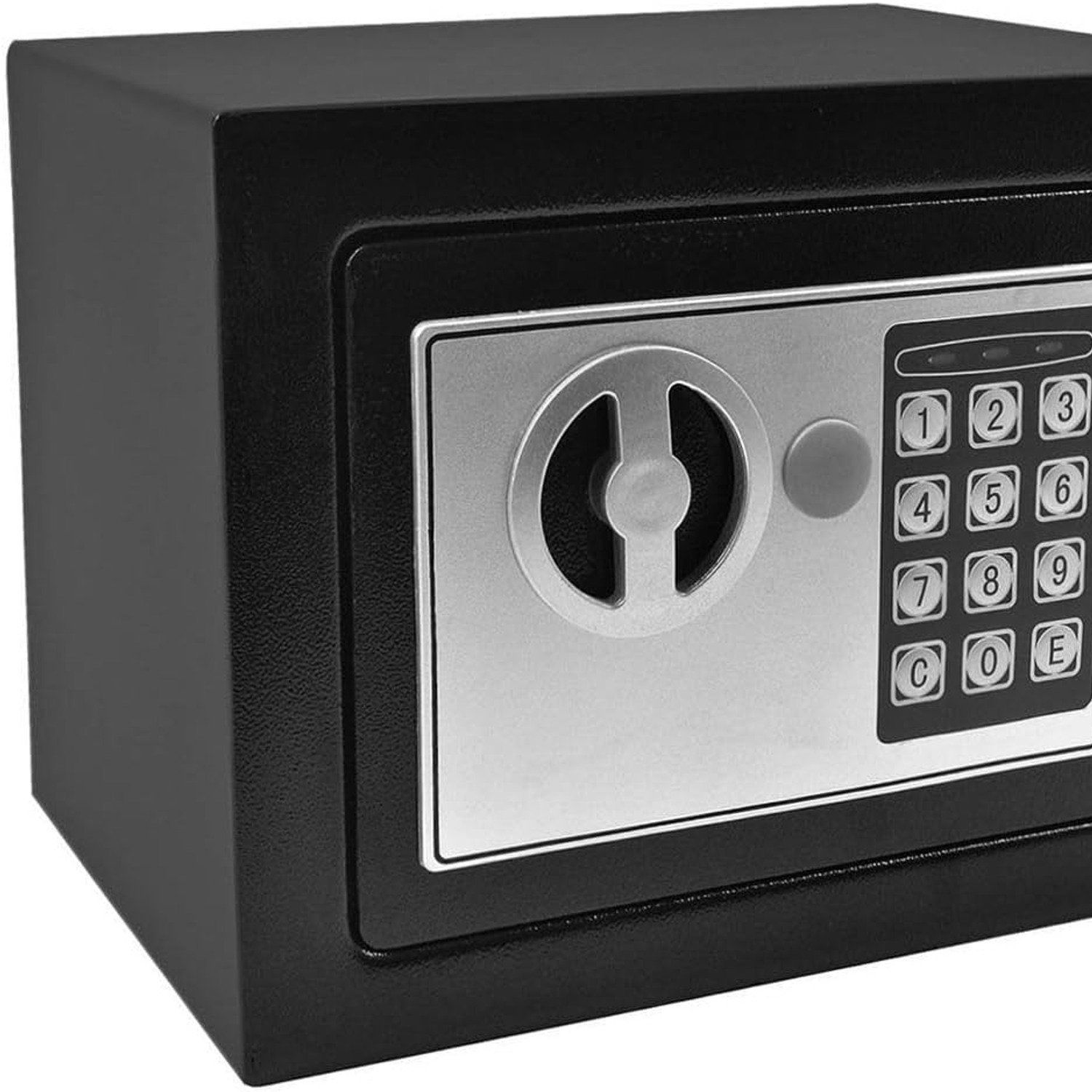
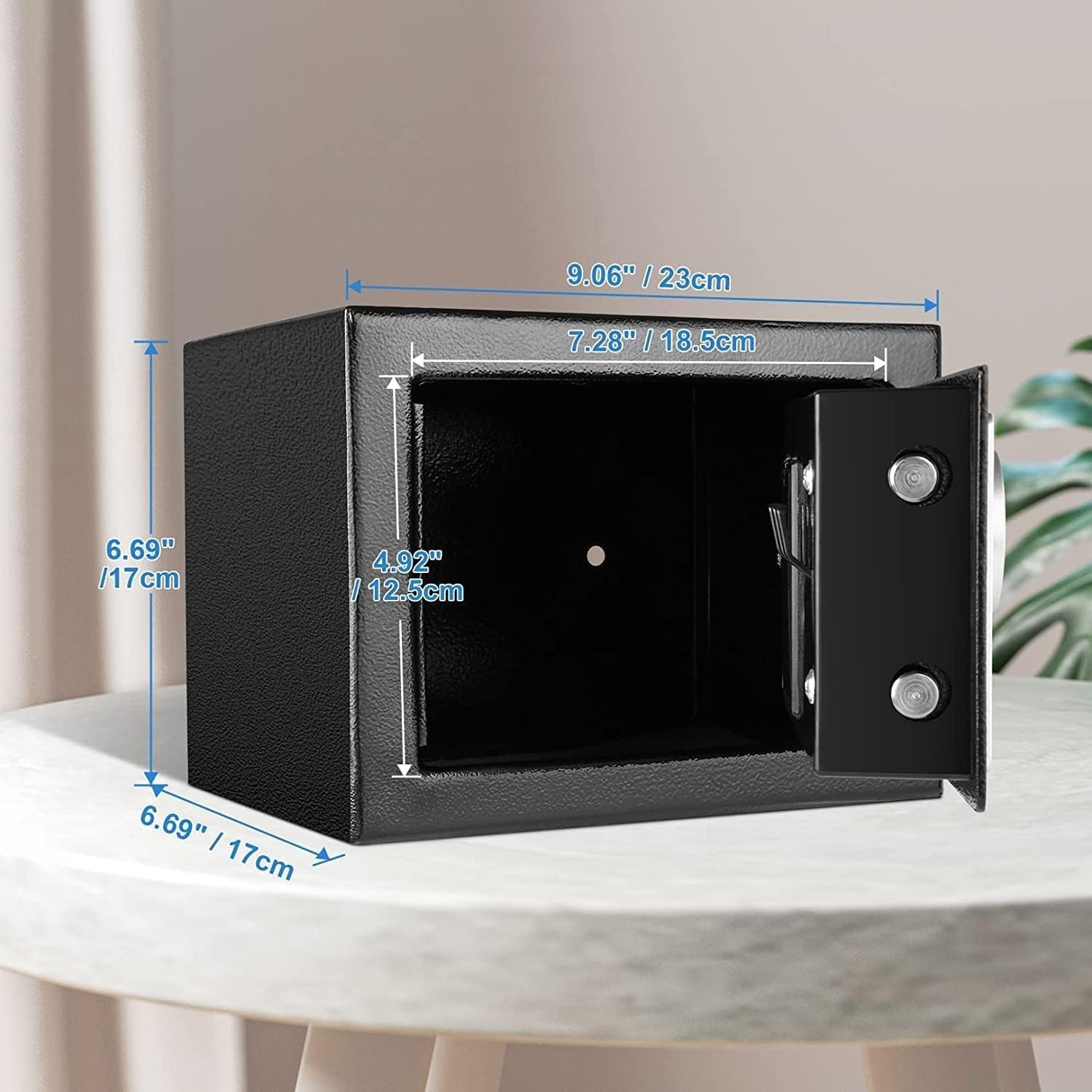
This model combines a programmable keypad with emergency key access. It measures 23 x 17 x 17 cm and weighs 2.28 kg. Those figures put it firmly in the small home safe category, so the first buying question is about fit, not how many items you hope to squeeze inside.
Think of it as one part of your storage plan. It can provide a dedicated locked space, but the maker does not give a burglary rating, tested fire endurance or insurance approval. If any of those are essential, confirm them before choosing a safe.
How the keypad and backup keys work
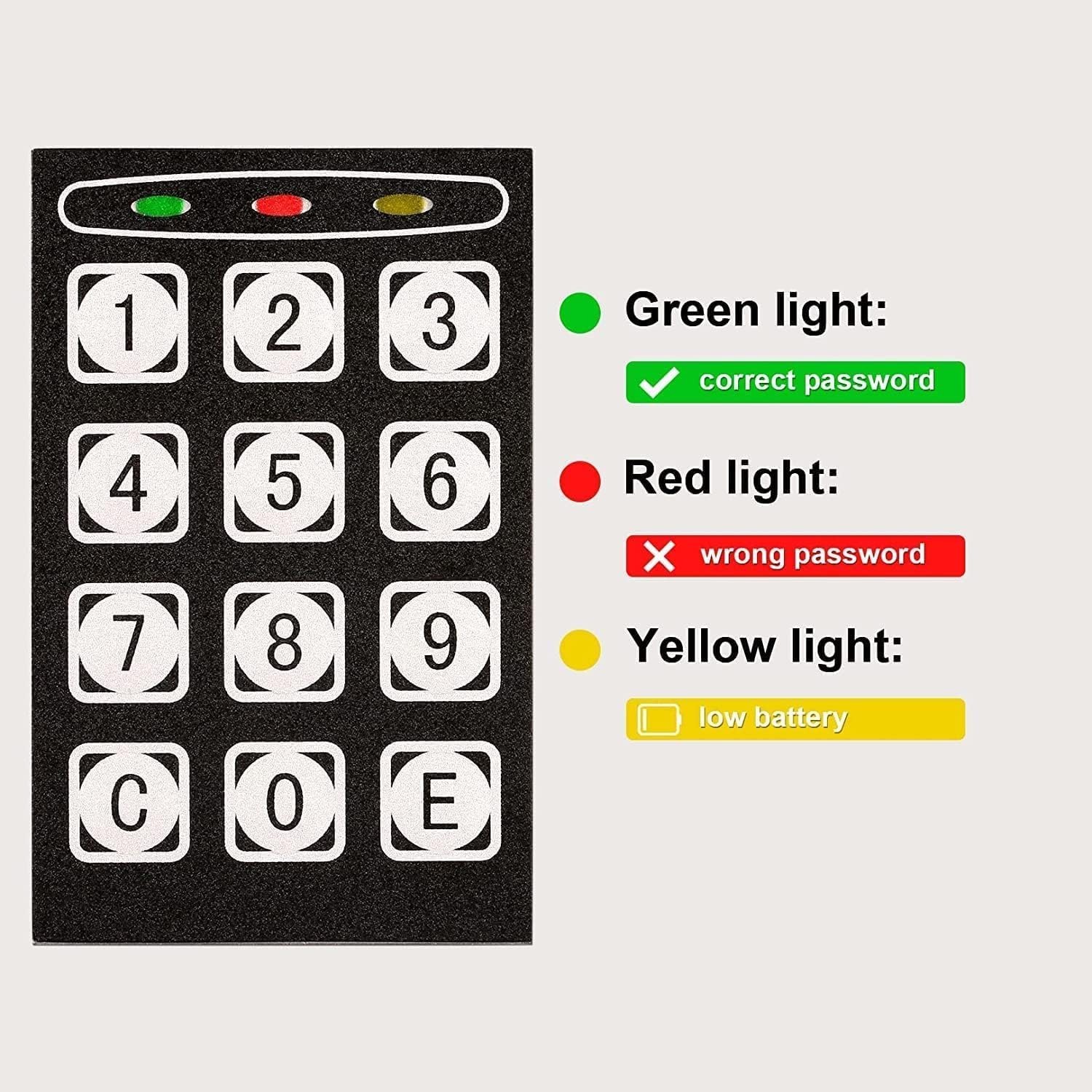
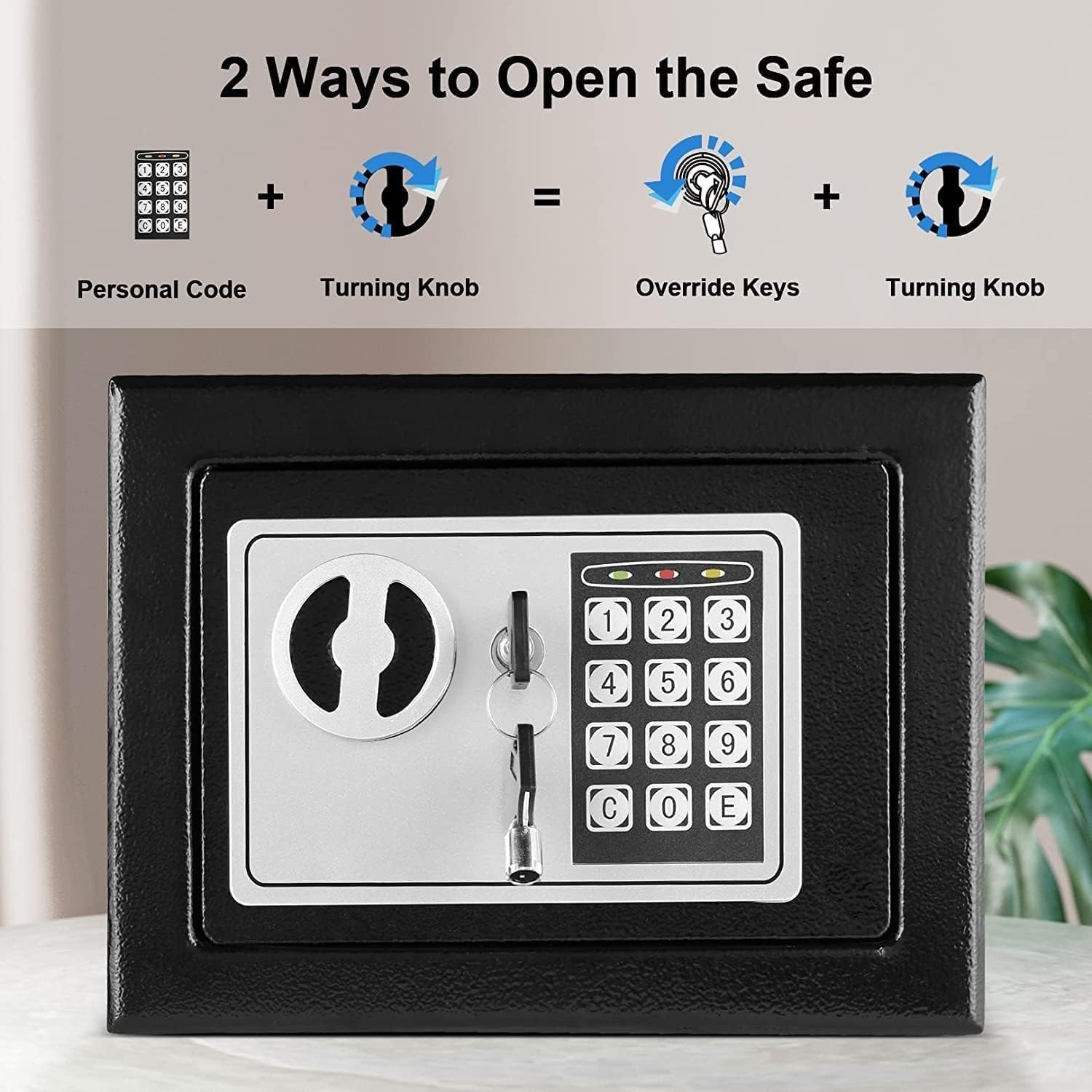
The electronic lock accepts a code of 3 to 8 digits. That lets you use the keypad for everyday opening without carrying a key each time. Audible prompts are listed, although the maker does not say whether the sound can be turned off.
After three incorrect attempts, the lock enters an automatic lockout. The length of that lockout is not specified. Read the supplied instructions before setting your code so you know what to do if you make a mistake.
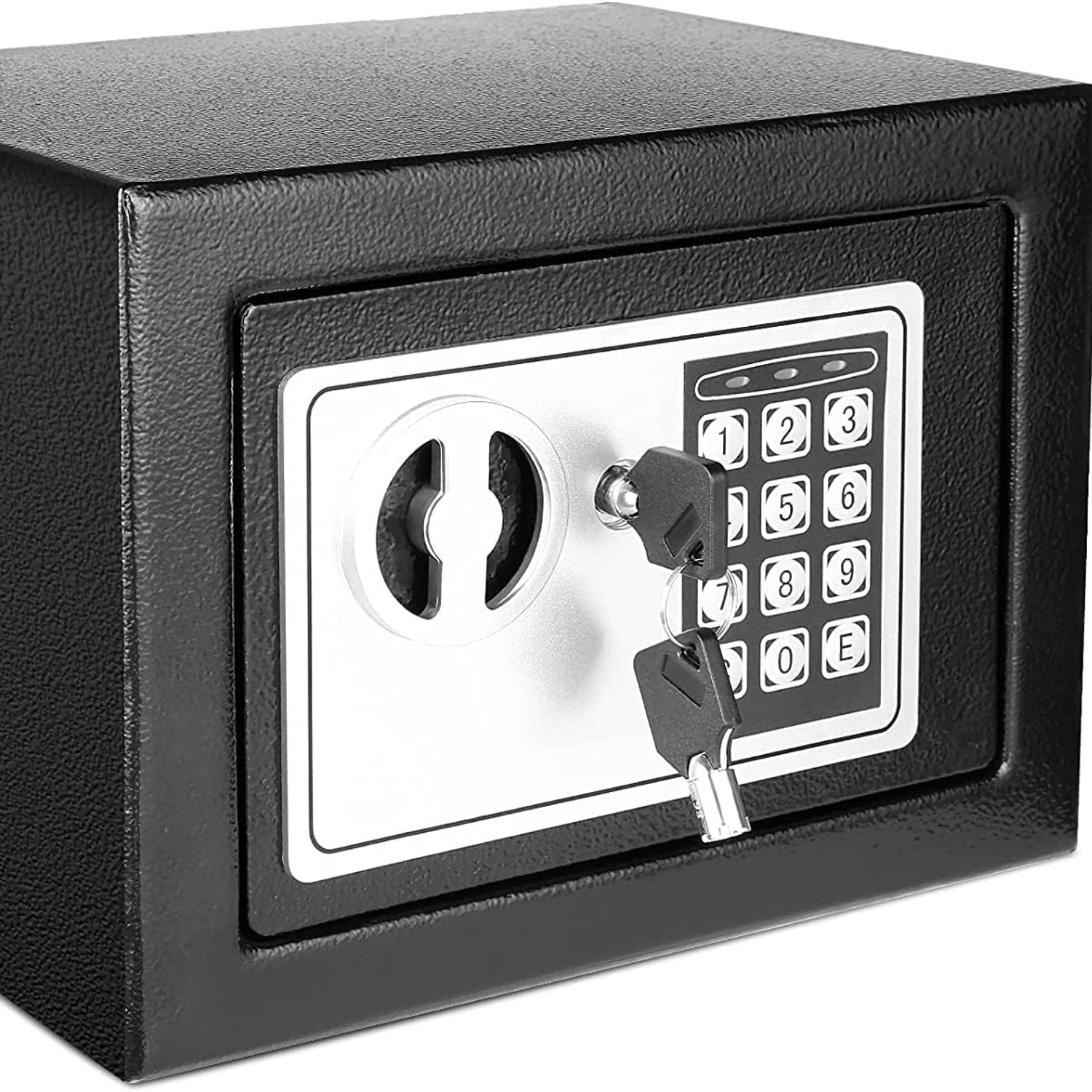
The emergency tubular key system provides a second access method. Two emergency keys are listed with the safe. Keep them somewhere secure and separate from it, rather than inside the locked compartment.
When setting up a programmable keypad safe, take your time. Follow the manual and test the opening process with the door open before putting valuables away. This gives you a chance to spot a setup mistake without locking your belongings inside.
Check the size against real items
The listed overall dimensions are 23 x 17 x 17 cm. Those measurements help you judge where the safe might sit, but they do not describe the full usable storage space. The door, walls and locking parts all need room.
A chamber depth of 17 cm appears in the product details. However, there is no complete set of usable internal dimensions or a door-opening measurement. Do not use that single figure to promise a snug fit for a particular box or device.
Lay out the items you want to store and measure them in their usual cases or pouches. Jewellery in a box takes more space than jewellery on its own. The same applies to passports kept in a travel wallet.
If you need to store full-size documents flat, look carefully at their dimensions. This is not a full-size filing safe. Folding a document may be acceptable for some papers, but it is a poor workaround for anything that must stay flat.
Who this small safe may suit
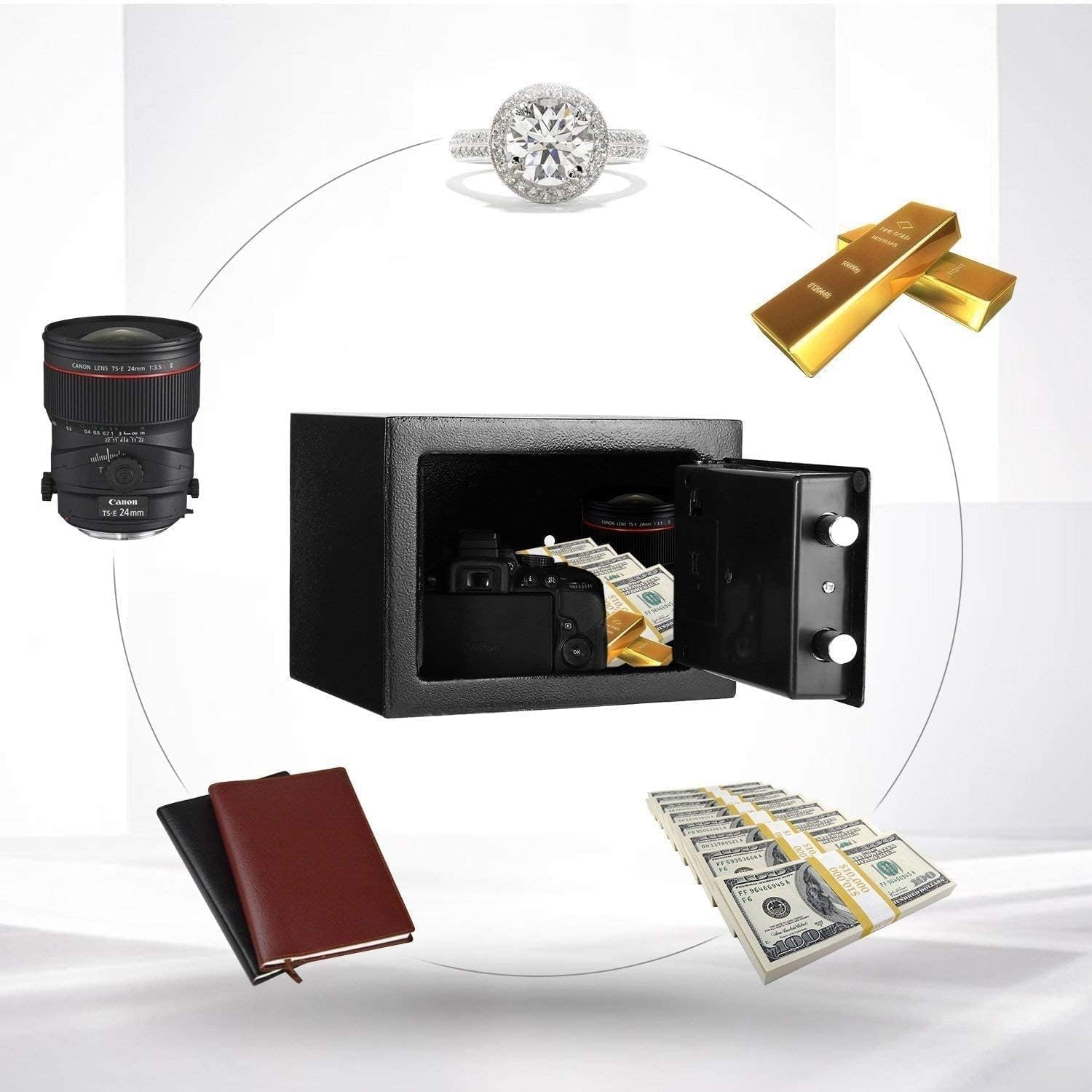
A keypad safe for home may suit someone who wants to keep a small set of valuables together. Cash, jewellery and passports are among the uses listed in the maker's description. Whether your particular items fit still needs checking.
It may also suit a modest office storage need. An office security safe can create a fixed place for small valuables instead of leaving them in an unlocked desk. Decide who needs access and how the emergency keys will be managed.
For a shared household, think about access before installation. One person may manage the code, or more than one authorised user may need it. Separate user codes and access records are not specified for this model.
This is less suitable as an unverified answer to specialist storage needs. If you need protection required by an insurer, or storage subject to specific rules, start with those requirements. A general product description is not a substitute for them.
Understand the steel construction
The product details describe black alloy steel, a 4 mm door and a 2 mm body. These are useful construction facts to compare with other products. They do not, on their own, tell you how long the safe would resist a forced-entry attempt.
The distinction matters because a steel home safe can look reassuring without having a stated security test result. No burglary classification is given in the maker's description. Avoid reading a tested level of protection into the word “steel”.
The details also mention fire resistance, but no test standard, exposure time or temperature is supplied. That leaves no sound basis for predicting how documents or other contents would fare in a fire.
If fire protection is your main reason for buying, choose based on a documented rating suited to the contents. For this model, treat fire performance as unverified rather than filling the gap with an assumption.
Choose the location before you buy
A compact safe needs more than a gap that matches its outside dimensions. Leave space to open the door, read the keypad and insert an emergency key. A location that looks tidy may be frustrating if you cannot reach the controls.
Think about daily use as well. A cash storage safe that is awkward to reach may encourage you to leave money elsewhere. A practical location makes it easier to follow the storage habit you intended.
Wall and floor mounting are described, and mounting screws are listed. Check the manual for the available fixing points. The maker does not give screw specifications or say which wall and floor materials they suit.
Choose a sound mounting surface and suitable fixings. Ask a qualified installer if you are unsure about the surface or what may be behind it. Do not assume that the supplied screws are right for every installation.
Why mounting deserves attention
At 2.28 kg, this safe is light enough to move between locations. That can help when positioning it, but it also means weight alone is not a good way to keep it in place.
A wall mount safe should be fixed to an appropriate surface, not simply placed against a wall. The aim of mounting is to make removal harder. How well that works depends on the installation as well as the safe.
Plan the mounting position before loading it. Check door clearance, access to the controls and any instructions about battery access. Making these checks early is easier than moving a fully arranged storage area later.
If you cannot mount the safe, consider that limitation when weighing your options. A portable steel lock box and a fixed safe serve somewhat different practical needs. Neither should be chosen on appearance alone.
Batteries and everyday access
The lock uses four AA batteries, which are not included. Have them ready for setup and follow the manual for fitting and replacement. Battery life and low-battery warning details are not specified by the maker.
The saved code is retained during battery replacement. That is useful for routine upkeep, but it does not remove the need to keep emergency keys available. Backup access is only helpful when you can reach the key.
Choose a code that is not easy to guess from personal details. Avoid sharing it more widely than necessary. If access arrangements change, consult the instructions for changing the code.
Keep the keypad dry and take care when entering the code around other people. These are simple habits, but they matter just as much as choosing a convenient place for the safe.
Care, contents and keeping things organised
Wipe the outside with a soft, dry cloth. Do not spray cleaner into the keypad, lock opening or battery compartment. Follow the manual rather than adding oils or other treatments without instructions.
Check that the door closes freely and that contents are clear of the locking area. Overfilling a small valuables safe makes everyday use awkward. Leave enough space to see and reach what you need.
For a jewellery storage safe, use suitable pouches or boxes to separate delicate pieces. Any lining or internal organiser is not specified by the maker, so do not assume one is supplied.
Check mounting points from time to time and look for loose fixings or signs of movement. If something changes, address it before continuing normal use. Keep the instruction manual somewhere accessible outside the safe.
Compare the whole purchase, not just the price
A useful home safe buying guide starts with your actual contents and the protection you need. Compare usable capacity, access options and installation needs before comparing prices. A lower price does not help if the item you bought it for will not fit.
Check what is included too. The maker lists the safe, two tubular emergency keys, an instruction manual and mounting screws. Batteries need to be bought separately, and installation may call for different fixings.
Before ordering, read our delivery and returns pages' current delivery and returns information. Check the destination estimate and the process for reporting damage or missing parts. Do not infer a delivery date from the product's stock status alone.
As a gift, a digital electronic safe box is most useful when the recipient has a clear need for it. Let them set their own code and choose where to keep the backup keys.
The short version
This compact electronic safe offers keypad entry, emergency key access and wall or floor mounting in a small steel body. It is worth considering for a limited collection of small valuables when its size and access method suit your routine.
Measure first, plan the mounting and read the setup instructions. Keep the backup keys separate, buy the required AA batteries and do not assume unlisted fire or burglary protection. Those checks will help you decide whether this is the right safe or whether you need a larger or specifically rated option.