
The complete guide
A Practical Guide to Choosing a Locking Cash Box
Give loose cash a proper place
Cash is easy to misplace when it shares a counter with receipts, bags and everyday clutter. Coins drift into corners. Notes end up under paperwork. Even a small float becomes harder to count when there is no clear place for it.
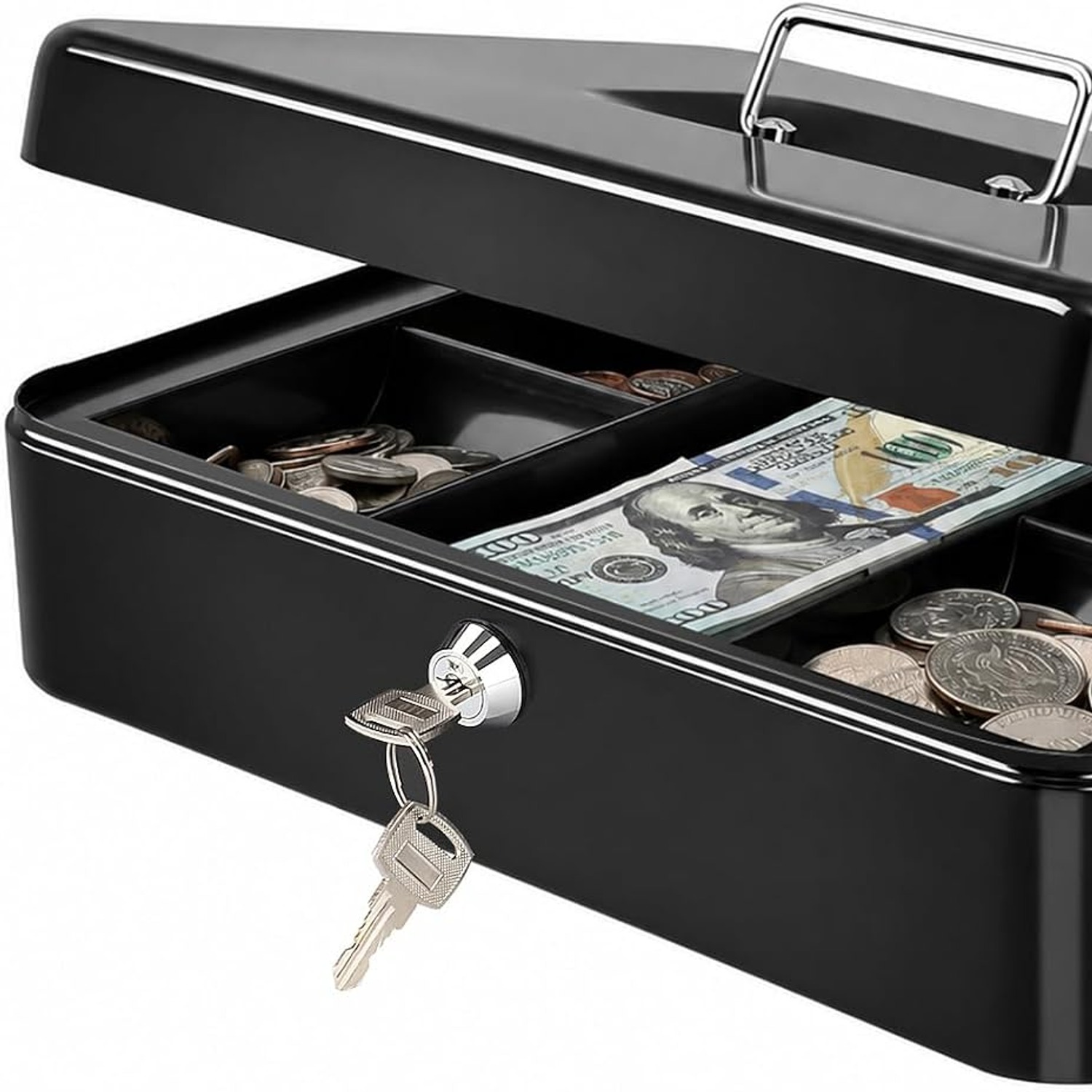
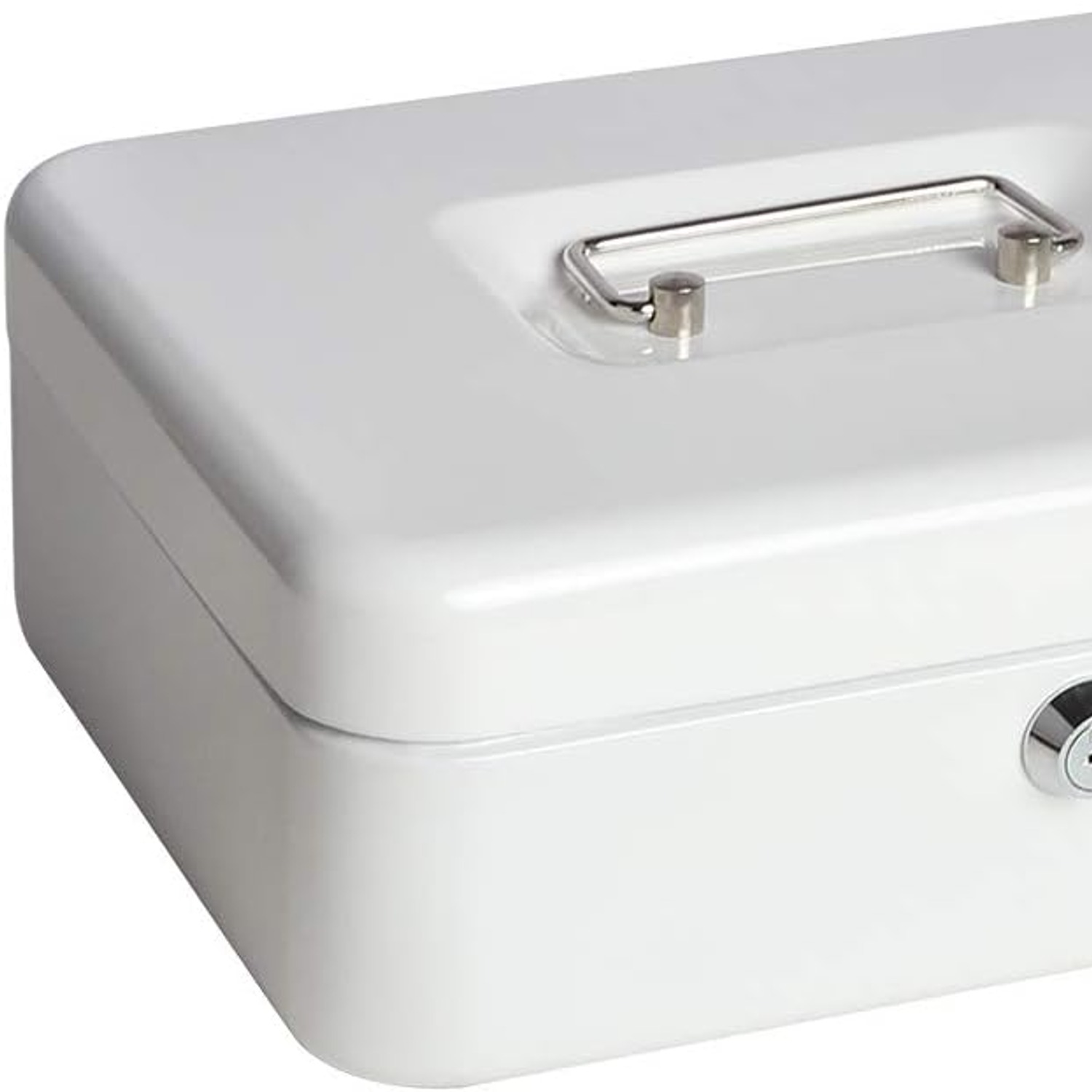
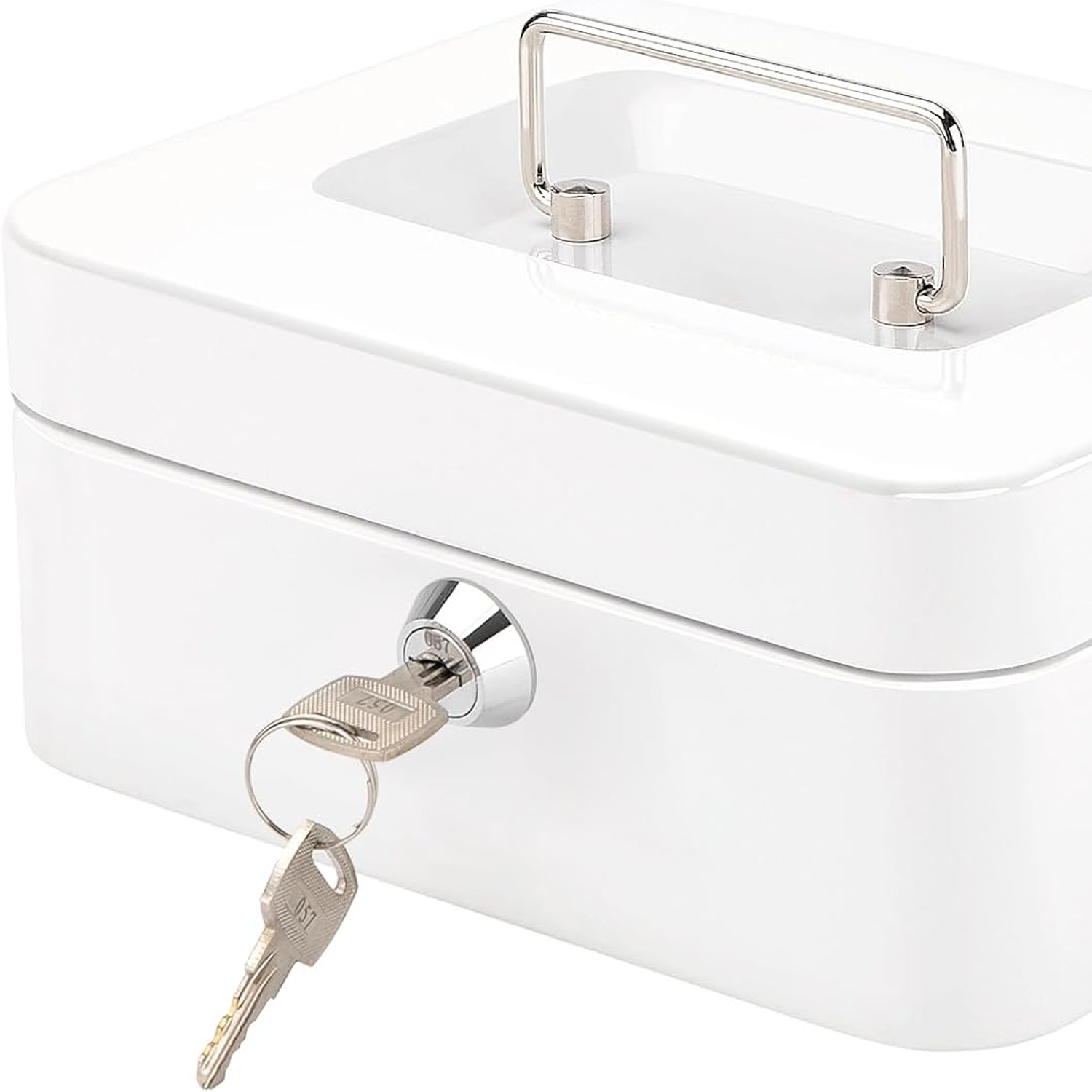
A locking cash box gives that money a home. This model combines a removable compartment tray with space underneath for bills and checks. A mechanical key lock controls access when the box is closed.
That makes it worth considering for everyday cash organisation. The important part is knowing what you need it to do. Keeping change sorted is a different job from protecting valuables against fire or forced entry. This guide helps you judge the fit without treating a cash box as something it is not.
How the tray and lower space work
The tray gives you a place to separate the cash you use most often. Instead of searching through a mixed pile of coins, you can give different denominations their own sections. The maker describes a five-section tray, although detailed compartment measurements are not provided.
Lift the tray and you can reach the space below. The maker describes this area as suitable for bills and checks. It may help you keep reserve notes away from the change you handle during each transaction.
Think about your usual routine before deciding how to arrange it. A small float with a few denominations has different needs from a busy cash table. The useful question is not just how much money the box can hold. It is whether you can reach, sort and count that money without making a mess.
Understand what the key lock offers
A key lock is straightforward to use. There is no code to remember or share, and no electronic lock setup is described. A key is included, but the maker does not confirm how many keys come with the box.
The trade-off is key management. Decide who will hold the key during use and where it will go afterwards. Leaving it beside the box weakens the point of locking the lid.
It is also important to keep expectations realistic. No burglary rating, tested resistance level or security certification is stated. A metal cash box with a lock should not be treated as a rated safe. If your insurer, workplace or club requires a particular security standard, check that requirement before buying.
Check the dimensions against your space
The product details list dimensions of 25.9 x 30.5 x 9.4 cm. Use those figures as an initial guide when planning a counter, shelf or cupboard position. Allow extra room to open the lid and lift the tray out.
There is a detail worth checking before purchase. Other maker wording gives different exterior measurements. If you need the box to fit inside a shallow drawer or a close-fitting storage space, ask for confirmation rather than relying on a tight allowance.
External dimensions also do not tell you the size of each cash compartment. The box walls, tray and lock take up space. If a particular banknote, envelope or check format must lie flat, request usable internal measurements. That is more helpful than assuming the outside footprint equals the storage area.
Look beyond the capacity figure
The listed capacity is 393 cubic inches. That gives a general volume figure, but it does not tell you how many coins or notes you can store comfortably.
Cash is awkward to measure by volume alone. Loose coins create gaps, while folded notes and envelopes use space differently. A tray also divides the available room into sections that may suit some denominations better than others.
For a coin organiser box, the layout often matters more than the headline capacity. Picture your normal float and the change you expect to receive. Leave some spare room so contents do not press against the lid or make the tray difficult to remove. Avoid choosing a box solely because its volume sounds large.
Who this box may suit
A petty cash box can help an office keep a small working float in one place. The tray can separate change, while the lower space provides another area for notes or checks. Pair the box with a written record so the balance is easy to check.
For a club or community group, one shared container can make handovers clearer. Count the opening float, agree who has access, and record what is left at the end. The box supports that routine, but it cannot replace it.
A market stall cash box has a slightly different role. Quick access matters, along with a sensible place on the table. This model needs a dry, supervised position because it is not water resistant. It should stay within reach of the person responsible for taking payments, rather than being left on an unattended display.
Plan for event use
At a ticket desk or fundraising table, cash handling can become rushed. A cash box for events works better when its layout is decided before people arrive. Put the opening float in the tray and agree where larger notes will go.
If more than one person will handle payments, explain the arrangement at the start. Moving denominations around during a busy period makes counting harder. Keep a separate record for paid-out expenses so the closing balance does not depend on memory.
Choose the position carefully, too. Leave space for the lid and keep drinks away from the box. If the event is outdoors, provide a dry working area. Do not assume a cover or tent makes a non-water-resistant box safe from windblown rain.
Consider weight and handling
The listed item weight is 1.65 kg before any money or paperwork is added. Coins can increase that weight quickly, so consider the full load if you expect to move the box often.
The maker describes a stainless steel handle. Before lifting, close the lid properly and check that loose contents are not caught at the edges. Carry it carefully rather than letting it swing.
A freestanding cash box also needs a stable surface. Avoid placing it near the edge of a narrow table, especially where customers may lean or bags may catch it. At home, choose a storage spot that is easy to reach without lifting a loaded box above shoulder height.
Know the material and protection limits
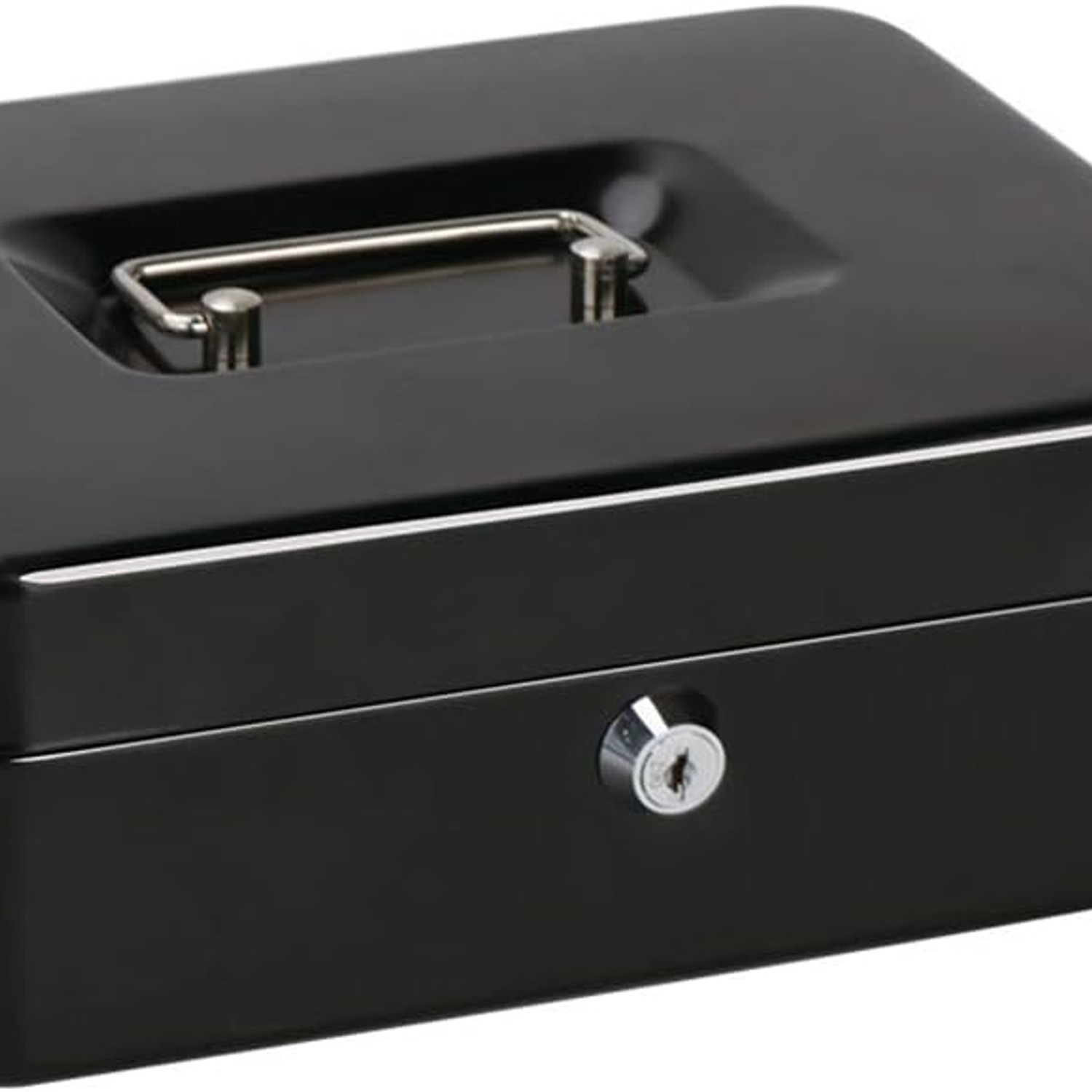
The product details list black as the colour and stainless steel and alloy steel as the materials. They do not give steel thickness, grade or a part-by-part breakdown. Those missing details matter if you are comparing construction closely.
The water resistance information is clear. This box is not water resistant. Store it away from damp floors, leaking windows and places where a spilled drink could run into it.
No fire rating is provided either. If your main aim is to protect important original documents from heat or water, look for storage with stated protection that matches that need. This steel cash box is better assessed by its cash layout, key access and practical fit.
Build a simple cash routine
Start each session by counting the float. Use the same tray sections for the same denominations each time. That makes it easier to spot when change is running low.
During use, avoid letting receipts or personal items cover the cash. Keep records separately where possible, and do not crowd the lower storage area until the tray no longer sits properly.
At the end, count the contents and compare the total with your records. Close and lock the box, then store the key separately. For business or group use, follow any rules about cash limits and end-of-day deposits. A lockable money box is one part of the process, not the whole security plan.
Care without fuss
Empty the box before cleaning so that loose coins cannot scratch across surfaces or hide debris. Wipe it with a soft cloth, then dry any moisture left behind. Do not soak the tray or box.
Keep the lock opening clear of dust and small scraps. If the key becomes difficult to turn, stop rather than forcing it. Check that the lid is aligned and nothing inside is blocking closure.
Avoid overfilling the tray. Contents should not need pressure from the lid to stay in place. A little spare room makes daily use easier and helps you see what is inside when counting.
The short version
Choose this key lock cash box if you want a removable tray, lower storage for bills and checks, and a freestanding format for everyday cash organisation. Its listed weight is 1.65 kg, and its product-detail dimensions are 25.9 x 30.5 x 9.4 cm.
Confirm measurements if space is tight, and ask about internal fit if you have specific notes or documents in mind. Keep it dry, manage the key carefully and use it under supervision. For needs that depend on tested fire or burglary protection, choose storage with the required rating instead.